

Sapphire Energy
MC4 to XT60 Solar Cable
MC4 to XT60 Solar Cable
Couldn't load pickup availability
MC4 to XT60 Solar Cable
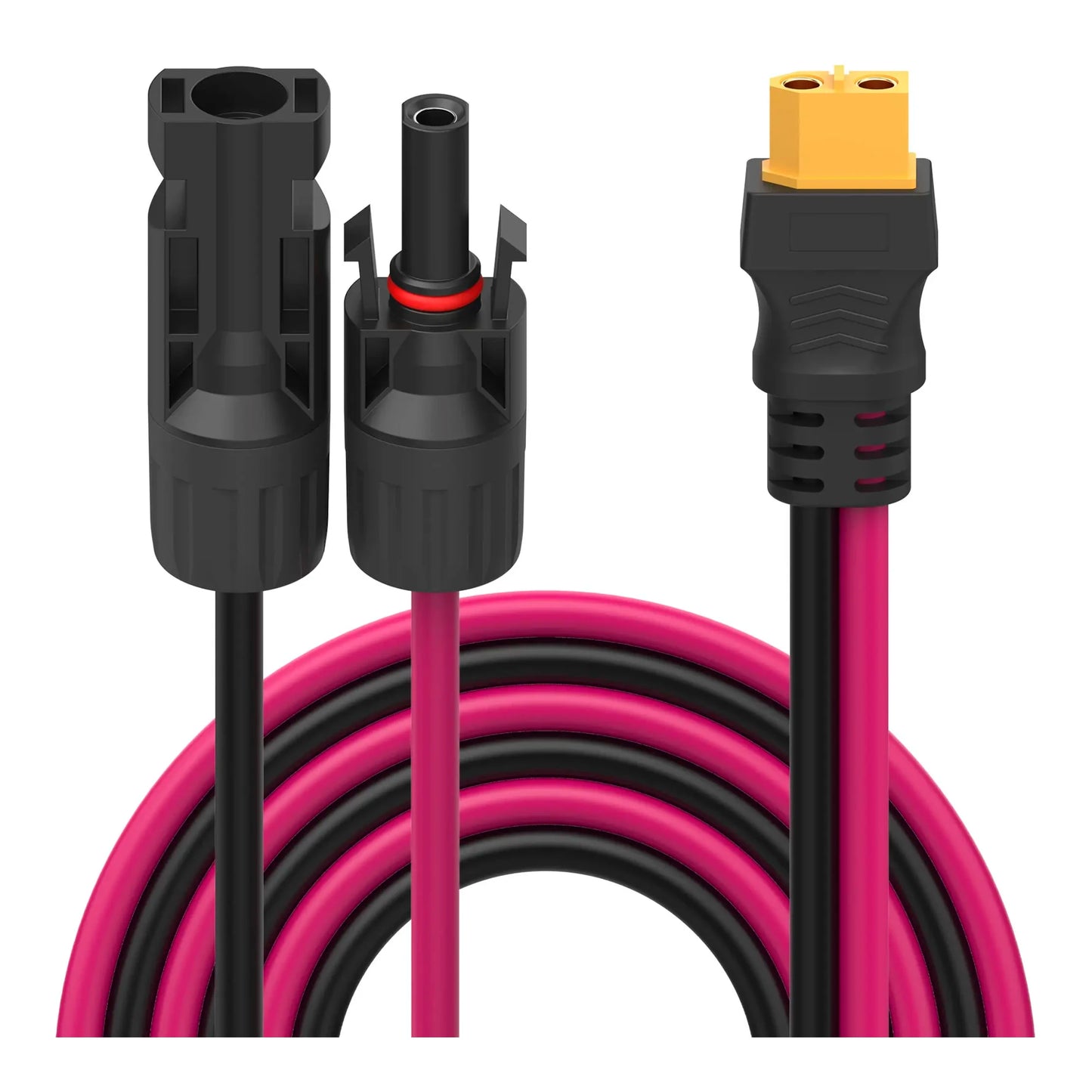
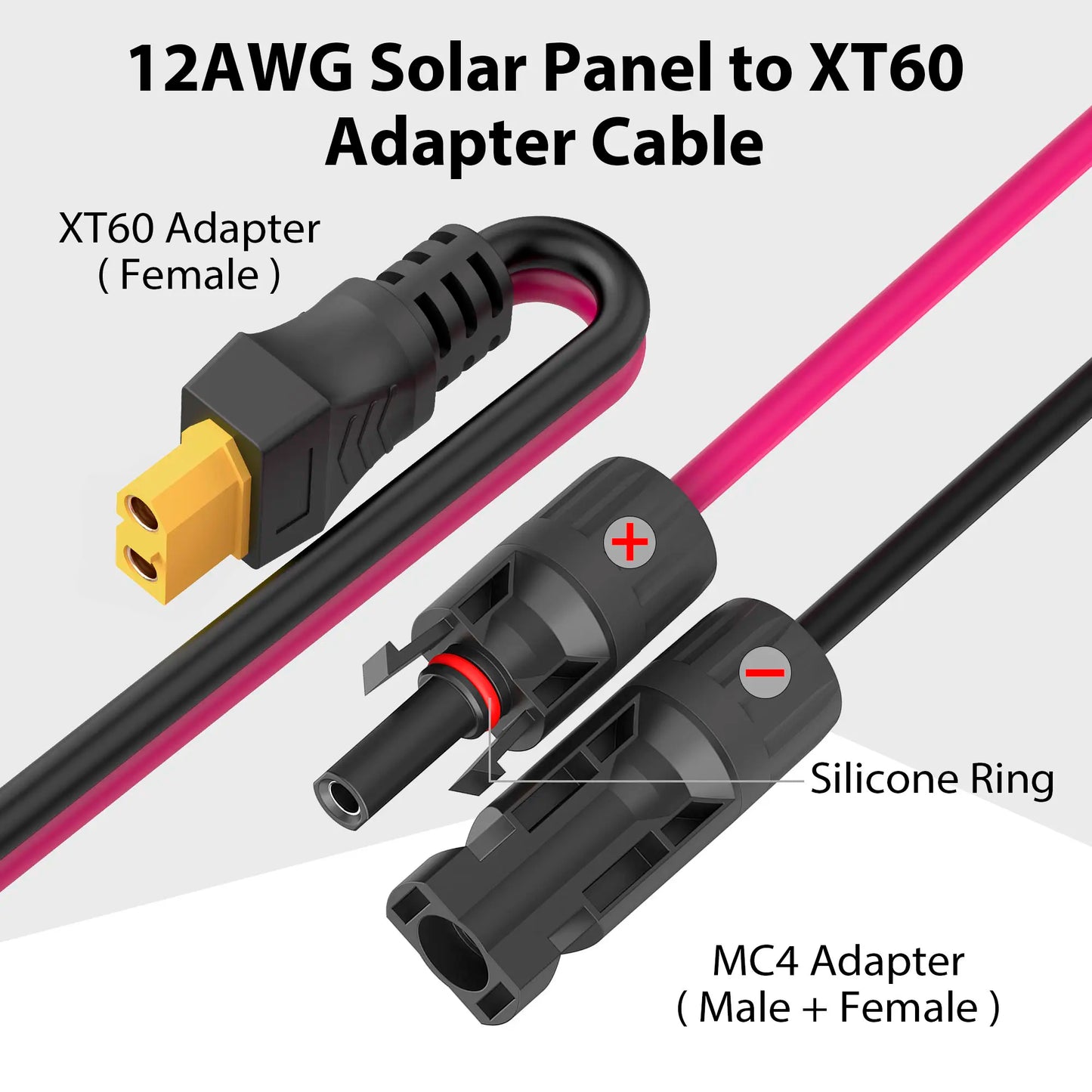
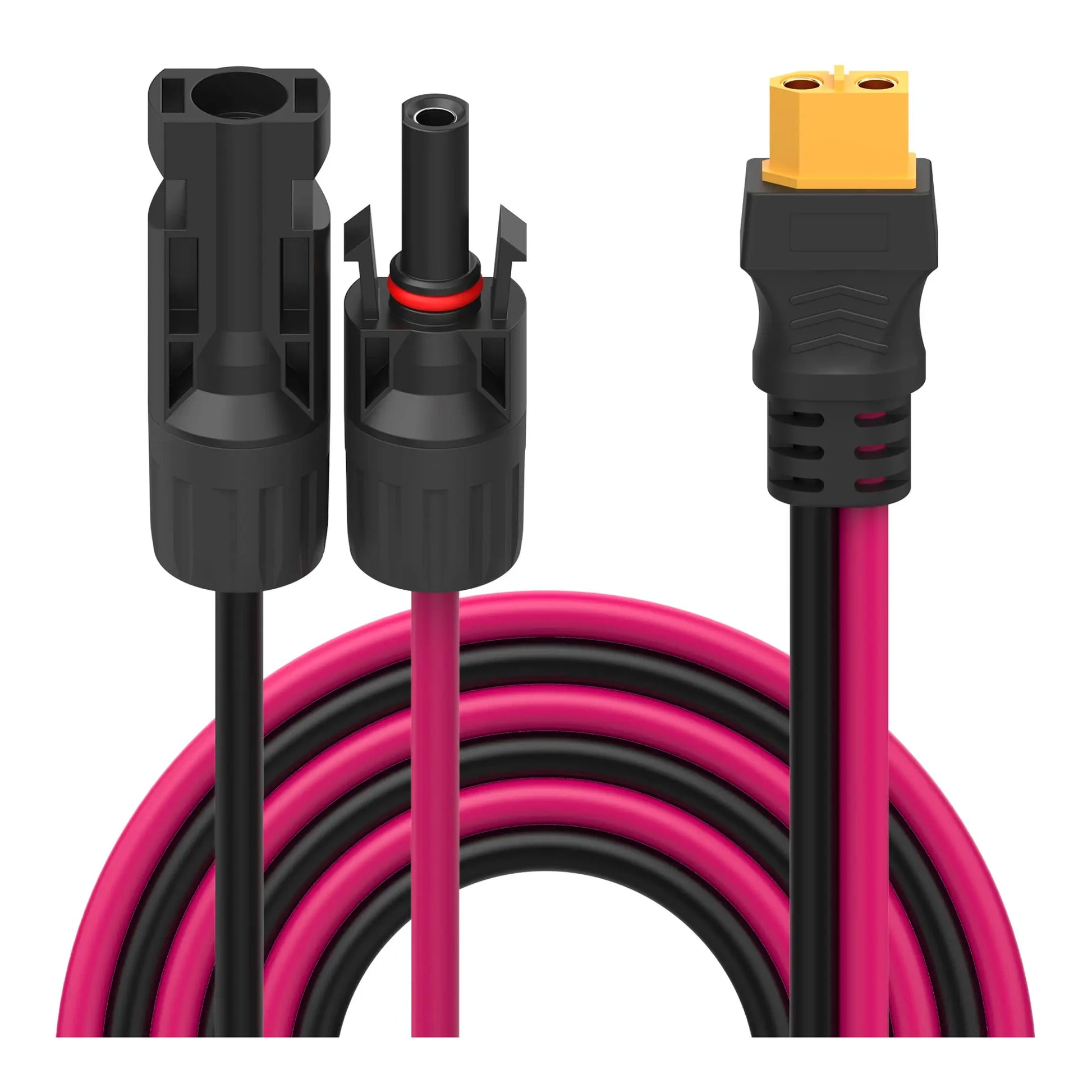
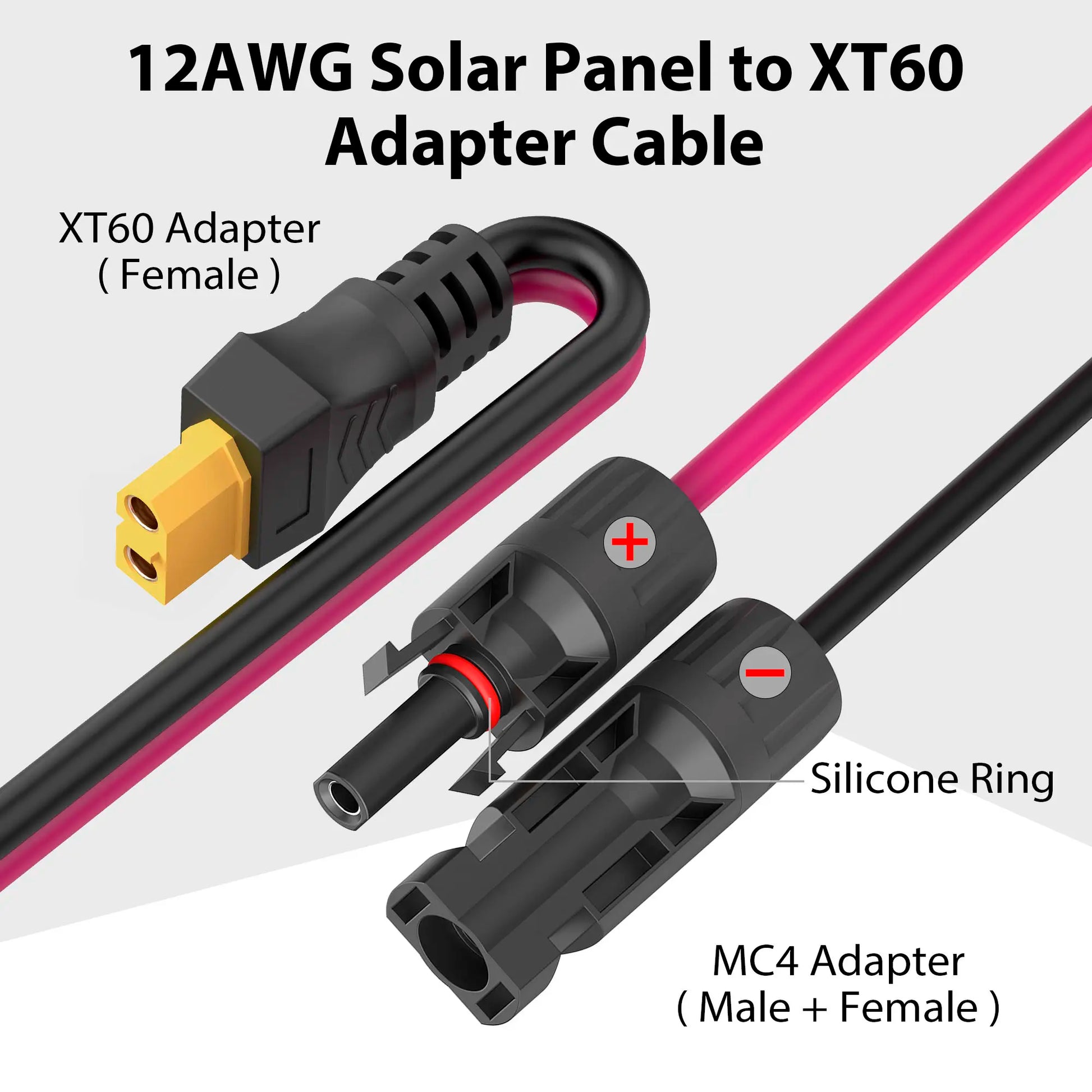
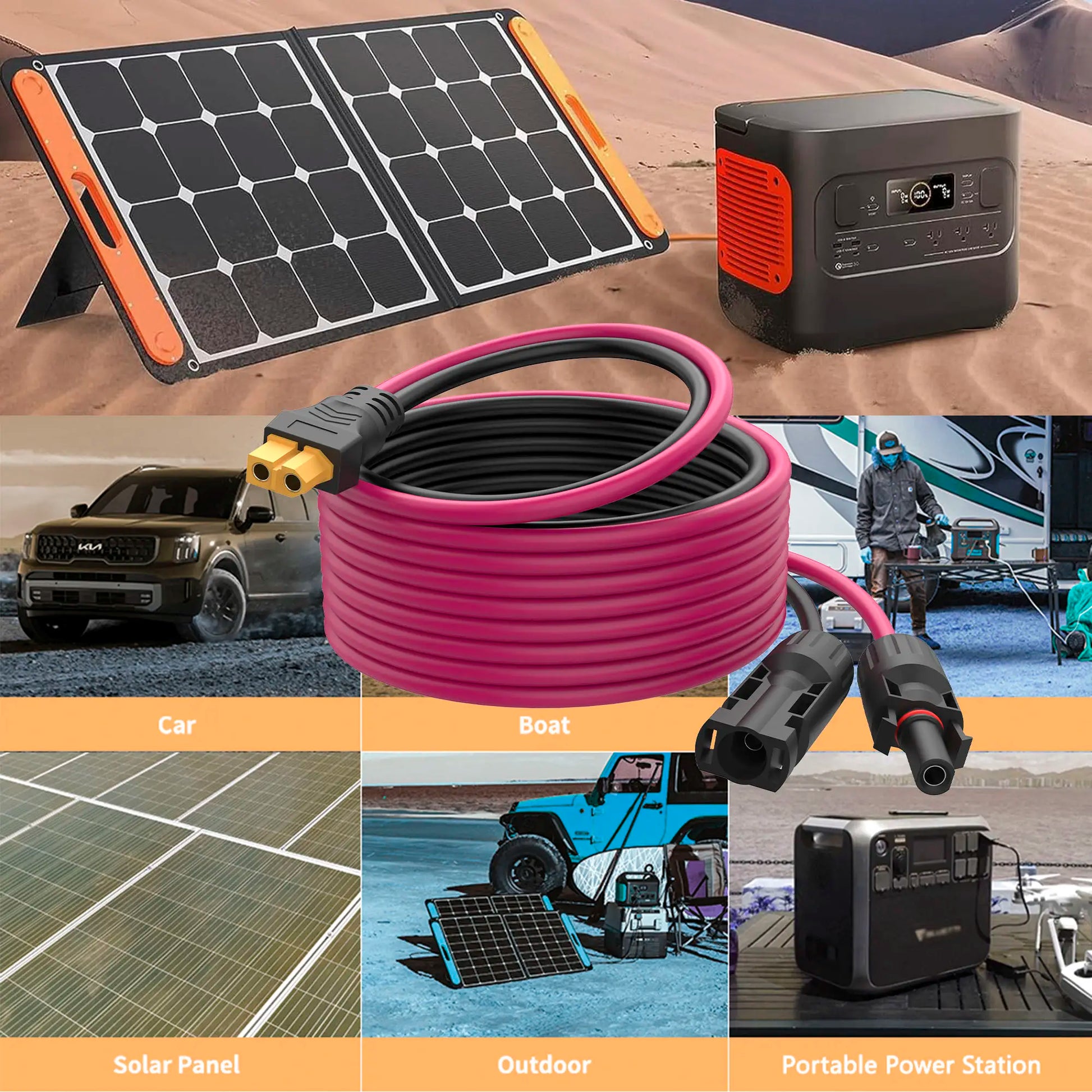
Connect standard MC4 solar panels directly to portable power stations equipped with an XT60 solar input. This durable 10' (3m) adapter cable provides a reliable connection for portable solar charging systems operating at up to 20A continuous.
Built with heavy-duty 12 AWG (4mm²) photovoltaic cable, it is an excellent solution for Bluetti power stations and other portable power systems that use a standard XT60 input and do not require the additional XT60i identification pin.
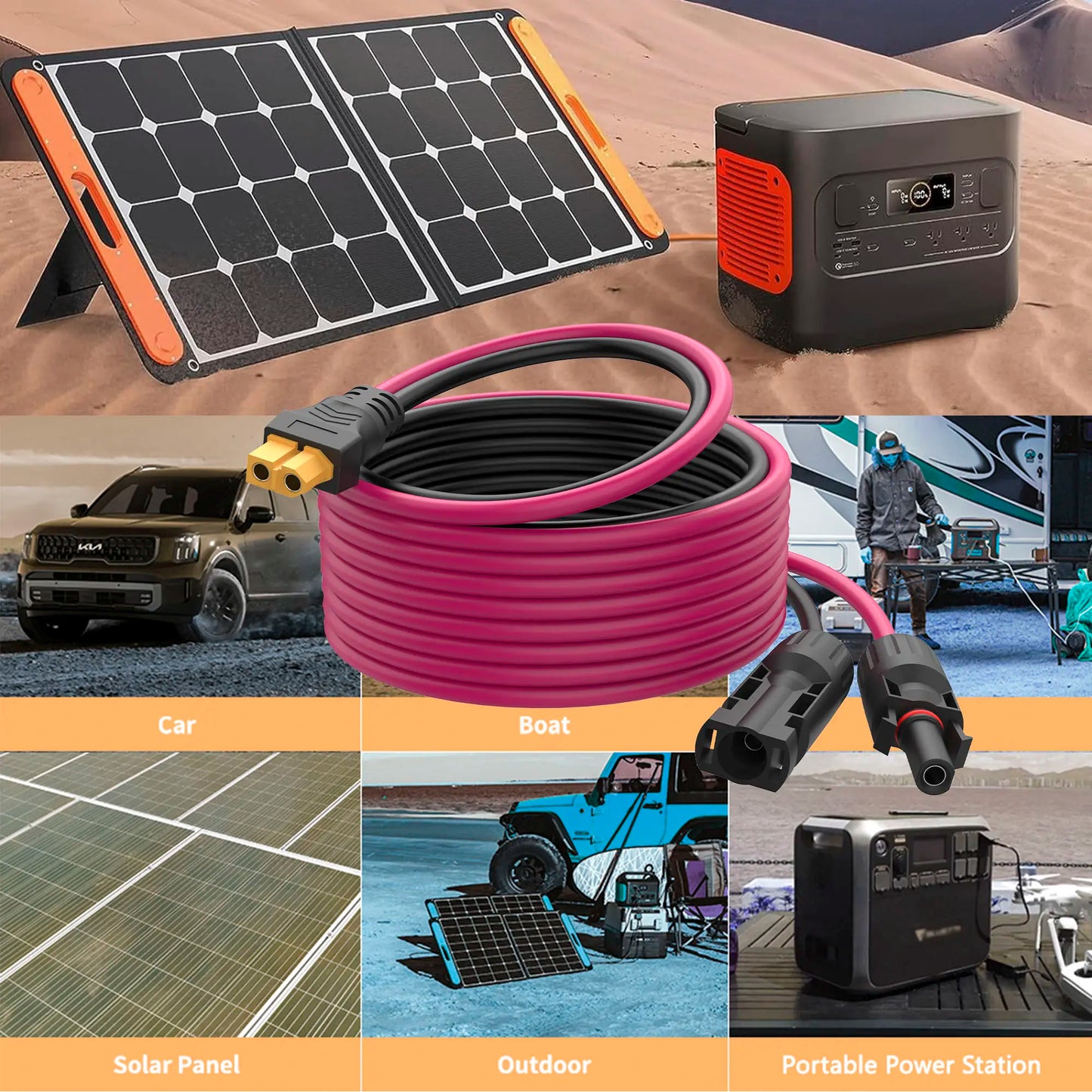
The generous cable length allows you to position your solar panels in the best available sunlight while keeping your portable power station in a convenient, shaded, or protected location.
Looking for an XT60i? We also off the XT60i style end, on a heavier cable, for installs requiring it.
Why You’ll Love It
- Standard XT60 Connection: Ideal for portable power stations that do not require the XT60i identification pin.
- Heavy-Duty Solar Cable: Constructed with 12 AWG (4mm²) photovoltaic cable.
- Up to 20A Continuous: Suitable for substantial portable solar arrays when voltage and current remain within equipment limits.
- Several Hundred Watts: Supports high solar wattage at appropriate array voltages without exceeding the cable’s current rating.
- MC4 Compatibility: Connects directly to standard rigid, folding, and portable solar panels using MC4 connectors.
- Flexible Placement: The 10' (3m) length provides room to position your panels and power station separately.
Built for Real Solar Power
Solar cable capacity is determined primarily by current, not solar-panel wattage alone. Because this cable is built with 12 AWG (4mm²) photovoltaic conductors, it is designed for installations operating at up to 20A continuously.
That means this cable can carry several hundred watts of solar power when the array operates at a suitable voltage. A 600W array operating at 45V, for example, produces approximately 13.3A—comfortably below the recommended continuous-current limit.
In most portable solar systems, the limiting factor will be the portable power station’s maximum PV input voltage and current rather than the cable itself.
Important: Solar-panel wattage alone does not determine cable suitability. Always confirm the array’s operating current, open-circuit voltage, and the portable power station’s PV input limits before connecting your equipment.
Designed for Standard XT60 Inputs
Many portable power stations, including numerous Bluetti models, use a standard XT60 connector for solar charging and do not require an XT60i identification pin. For these systems, this cable provides the connection you need without unnecessary extra wiring.
It is also suitable for other portable power stations, battery generators, and power systems that accept solar through a standard XT60 input. Always confirm the connector type and electrical limits listed in your equipment manual.
XT60 vs XT60i
A standard XT60 connector has two primary electrical contacts. An XT60i connector uses the same two power contacts but adds a small third identification pin.
The third XT60i pin does not carry solar charging current. It is used by certain portable power stations to identify the connected cable or power source. Some models may reduce their maximum solar input when that identification pin is not present.
You can usually identify an XT60i connection by looking inside the connector or socket. In addition to the two large power contacts, you will see a small third metal contact positioned between or beside them. If only the two large contacts are present, the connection is generally a standard XT60.
Connector appearance alone may not confirm whether the third pin is required for full charging performance. Check your owner’s manual for references to XT60i, a cable identification pin, or different solar and vehicle-charging input limits.
XT60i Is Backward Compatible: An XT60i cable can also be plugged into a standard XT60 input. The third identification pin simply remains unused. This makes our XT60i cable option a suitable upgrade when you prefer heavier cable or require one of the longer available lengths.
For additional guidance, read our Portable Power Station Solar Recharging Guide.
Perfect For
- Bluetti portable power stations with standard XT60 solar inputs
- Other XT60-equipped portable power stations
- Portable battery generators
- Rigid solar panels with MC4 connectors
- Folding and portable solar panels
- RV and camper solar charging
- Van conversions and overlanding setups
- Off-grid cabins and remote power systems
- Emergency backup and preparedness systems
Need a complete portable solar solution? Pair this cable with our Canadian-built Lumera 200W Folding Solar Panel Kit for portable charging at campsites, cabins, work sites, and remote locations.
Specifications
| Length | 10' (3m) |
|---|---|
| Cable Size | 12 AWG (4mm²) |
| Solar Connector | MC4 male and female pair |
| Power Station Connector | Standard XT60 female |
| Recommended Continuous Current | 20A |
| Maximum Current | 30A |
| Primary Application | Connecting MC4 solar panels to XT60-equipped portable power stations |
| Warranty | 1-Year Limited Warranty |
Specifications are provided for general reference and may vary slightly between production runs. Always verify your portable power station’s connector type, maximum PV voltage, and solar input current before connecting any solar panel.
Building a custom solar cable? We also stock XT60 connector pairs, weatherproof MC4 connector pairs, and bulk 10 AWG photovoltaic cable for custom lengths, repairs, and DIY solar wiring projects.
Frequently Asked Questions
Will this work with my Bluetti portable power station?
Many Bluetti portable power stations use a standard XT60 solar input and do not require the additional XT60i identification pin. For these models, this cable is an excellent solution for connecting standard MC4 solar panels.
Bluetti has produced many different power-station models, so always verify your specific unit’s connector type, maximum PV voltage, and solar input current before connecting a panel or array.
Will this work with my EcoFlow power station?
It depends on the model. Standard XT60 and XT60i connectors use the same two main power contacts, so this cable can physically connect to an XT60i-equipped input.
However, some EcoFlow models use the third XT60i identification pin to distinguish between solar and vehicle-charging sources. These units may limit charging current or input power when a standard XT60 cable is used.
If your EcoFlow manual specifies XT60i or lists different input limits depending on the cable type, use an XT60i cable for full supported performance.
How do I know if my power station needs the third pin?
Inspect the power station’s input socket and the original charging cable. A standard XT60 connection normally has two large power contacts. XT60i adds a small third identification contact inside the connector.
You should also check the owner’s manual for references to XT60i, a cable identification pin, or different solar and vehicle-charging current limits. The connector may physically accept either cable even when the third pin is required to unlock the unit’s full solar input.
Our Portable Power Station Solar Recharging Guide provides additional information.
If you are still unsure, send us the exact brand and model number of your power station and we can help you identify the correct cable.
Does the third XT60i pin carry solar power?
No. Solar charging current travels through the two large XT60 power contacts. The small third XT60i contact is an identification or signalling pin used by certain power stations.
Its purpose is to help the power station identify the cable or charging source. It does not increase the current-carrying capacity of the two main electrical contacts.
Can I use an XT60i cable with a standard XT60 input?
Yes. XT60i is backward compatible with standard XT60 inputs. The two main power contacts connect normally, while the additional identification contact remains unused.
Our XT60i cable option may be preferable if you need a longer cable or want the heavier cable construction available in that product line, even when your power station only requires standard XT60.
Do I need 10 AWG cable instead?
For most portable power station solar installations operating at 20A or less, 12 AWG cable is entirely appropriate.
The cable size must be selected based on current, total cable length, acceptable voltage drop, operating temperature, and installation conditions. This cable uses 12 AWG (4mm²) photovoltaic conductors and is rated for up to 20A continuous use.
A 10 AWG cable may be beneficial for longer cable runs, higher current, or applications where minimizing voltage drop is especially important. It is not automatically required simply because the solar array produces several hundred watts.
For example, a 600W array operating at 45V produces approximately 13.3A, which remains comfortably below this cable’s recommended continuous-current limit.
Can this cable handle 400W or 600W of solar panels?
Yes, provided the array’s operating current remains at or below 20A and its voltage remains within the portable power station’s allowable PV input range.
Solar wattage is the result of voltage multiplied by current. A higher-voltage array can deliver several hundred watts while drawing considerably less than 20A.
Always calculate the array’s operating current and cold-weather open-circuit voltage rather than choosing a cable based only on the total wattage printed on the solar panels.
What is the maximum solar-panel wattage I can use?
There is no single wattage limit that applies to every system because the available power depends on both voltage and current.
The cable should be limited to 20A continuous, while the connected array must also remain within the power station’s maximum PV voltage, current, and wattage limits.
In most installations, the portable power station’s input specifications will determine the maximum permitted array size before the cable reaches its current limit.
Can I connect MC4 solar panels directly to my power station?
Yes, when the solar panels use standard MC4 connectors and the power station accepts a standard XT60 solar input. This cable adapts the positive and negative MC4 panel leads to the XT60 connection used by the power station.
Before connecting, confirm that the panel or array’s polarity, open-circuit voltage, operating current, and total wattage remain within the power station manufacturer’s limits.
Can I use this with a rigid rooftop solar panel?
Yes. The cable can be used with rigid, folding, or portable solar panels equipped with standard MC4 connectors.
A rigid solar panel does not need to be permanently connected to a conventional charge controller. It may be connected to a portable power station as long as its voltage and current specifications are compatible with the power station’s built-in solar charge controller.
Can I connect multiple solar panels through this cable?
Yes, provided the completed array remains within the portable power station’s voltage, current, and wattage limits and the current through this cable does not exceed 20A continuously.
Series connections increase voltage while current remains similar to a single panel. Parallel connections increase current. This means parallel arrays are more likely to approach the cable or power station’s current limit.
Cold weather can also increase solar-panel open-circuit voltage, so sufficient voltage margin must be included when designing a series-connected array.
Is the cable suitable for outdoor use?
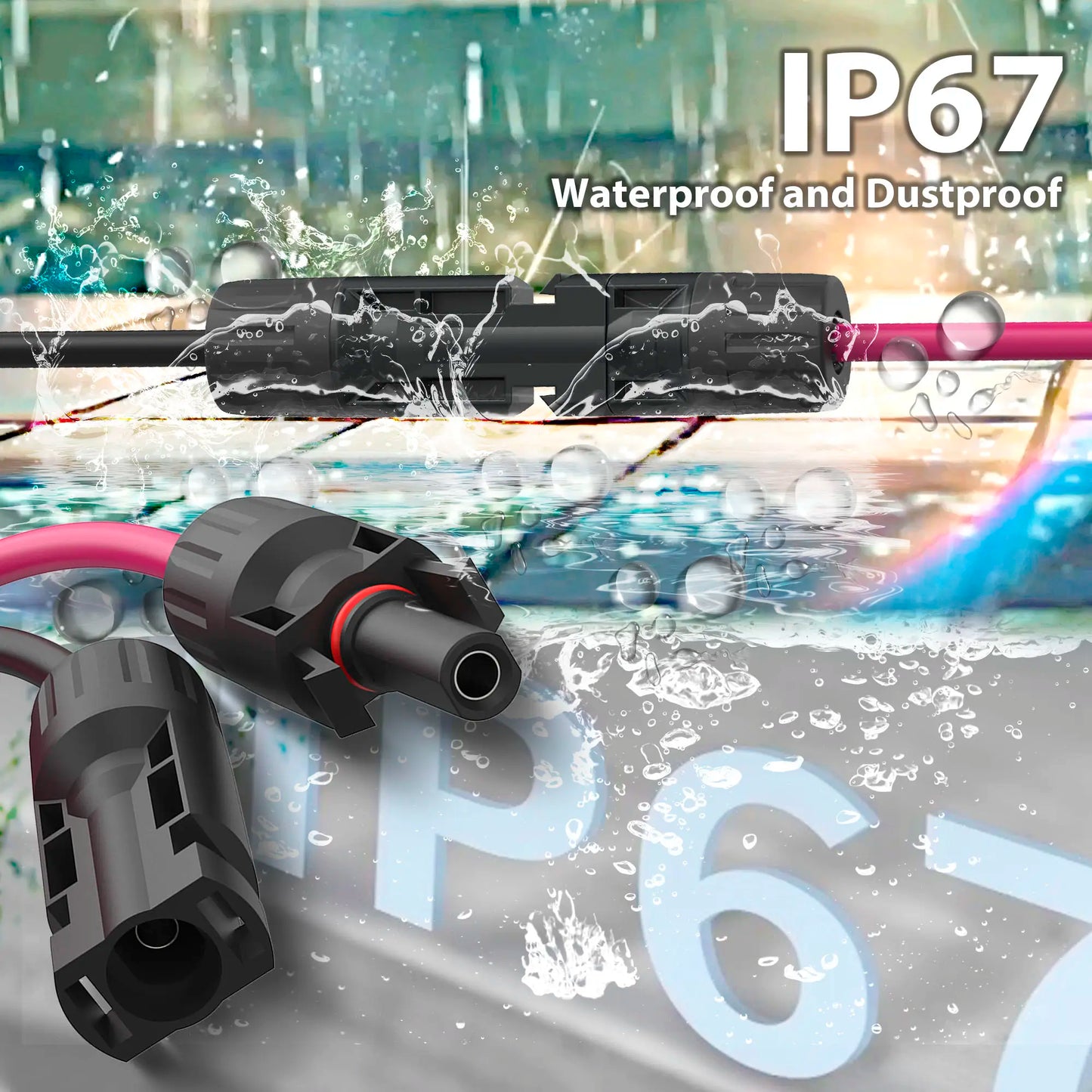
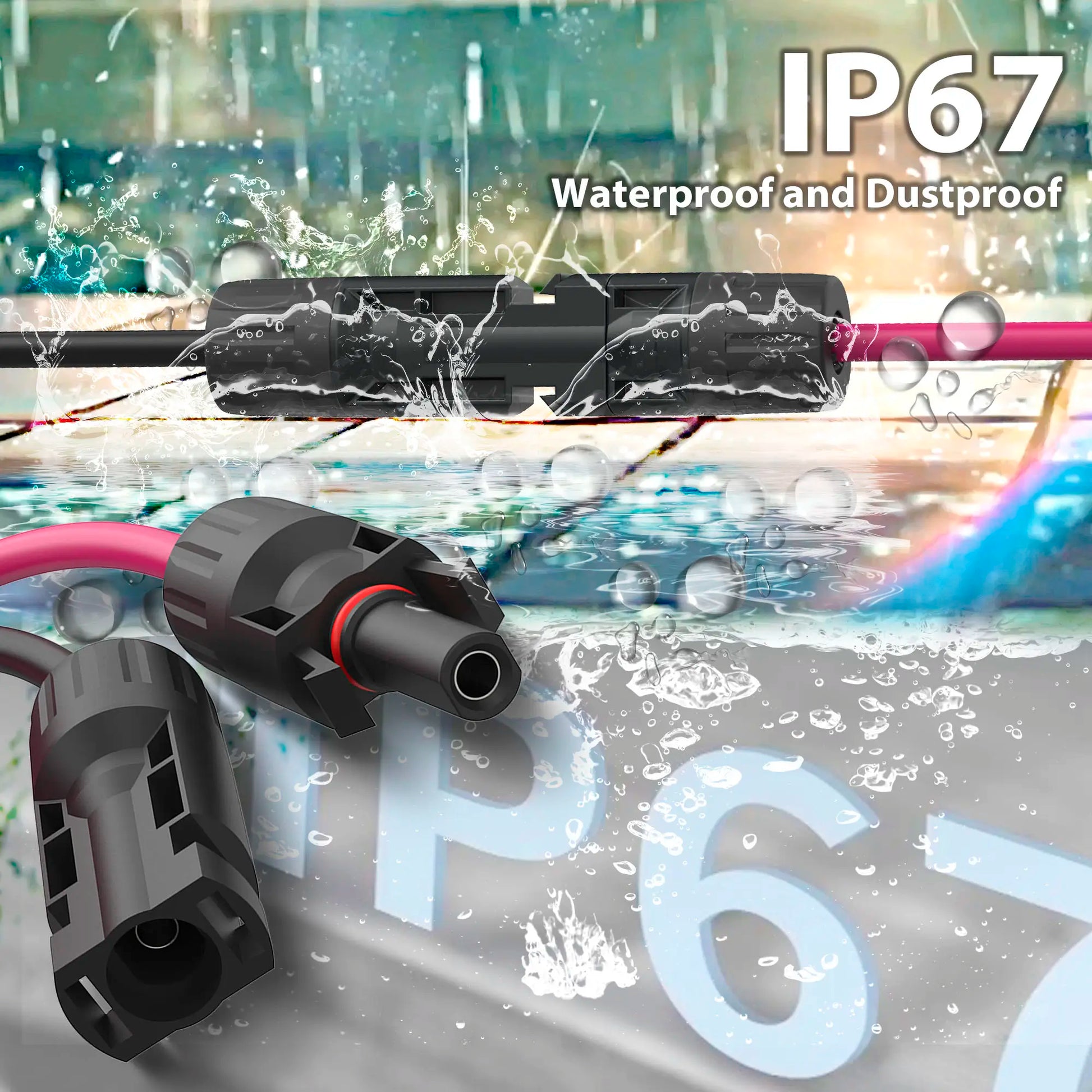
Yes. It is constructed using photovoltaic cable and weather-resistant MC4 connectors intended for solar applications.
Connections should still be fully seated and protected from physical damage. Avoid leaving disconnected connector ends exposed to rain, snow, dirt, or standing water.
Why is a 10-foot cable useful?
The additional cable length lets you place the solar panel in direct sunlight while keeping your portable power station inside a vehicle, camper, tent, cabin, or shaded location.
It also gives you more flexibility to adjust panel positioning during the day without repeatedly moving the power station and connected loads.
Can I build my own custom-length cable?
Yes. Customers with suitable tools and wiring experience can build custom solar charging cables using XT60 connectors, MC4 connector pairs, and photovoltaic cable.
A custom assembly may be useful when you need a specific cable length, heavier conductors, or a different connector arrangement. Correct polarity, secure crimps, suitable cable size, and proper strain relief are essential.
What warranty does this product include?
This cable includes a 1-Year Limited Warranty covering qualifying defects in materials and workmanship under normal use.
Damage caused by reversed polarity, excessive voltage or current, incompatible equipment, modified connectors, improper installation, or physical abuse is not considered a manufacturing defect.
Share