


Sapphire Energy
Marine Battery Cable (CSA / UL) 600V
Marine Battery Cable (CSA / UL) 600V
Couldn't load pickup availability
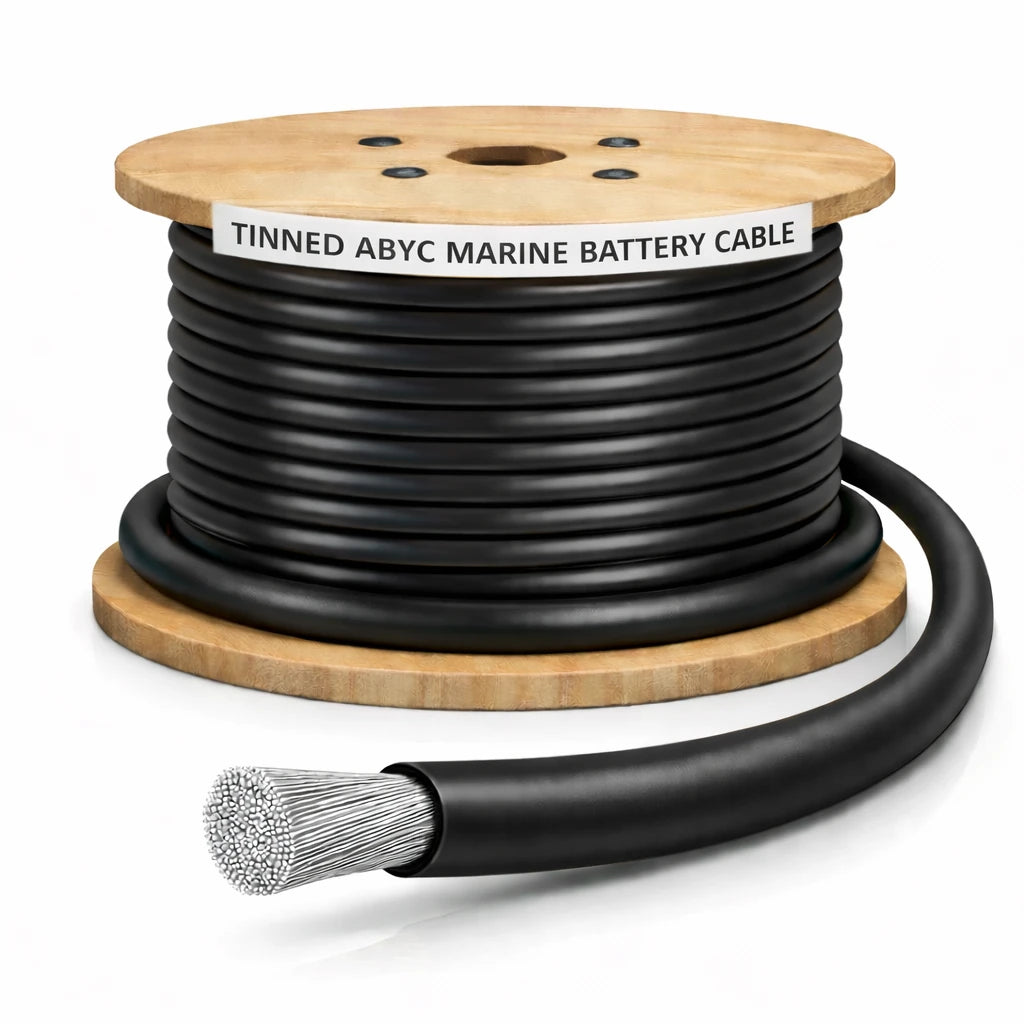
Premium CSA-listed Marine Battery Cable built with a flexible stranded tinned copper conductor and durable PVC insulation. Ideal for solar battery banks, inverter connections, marine wiring, and industrial DC systems where corrosion resistance and certification matter.
This is true MTW / TEW / BC-5W2 cable (not generic welding cable) — and it’s a common choice in marine electrical systems where installers are aiming for ABYC-compliance.
Sold by the foot
Get the exact length you need without over-ordering. We'll cut and ship the number of feet you add to your cart.
- Tinned copper conductor — improved corrosion resistance (especially in marine / coastal environments)
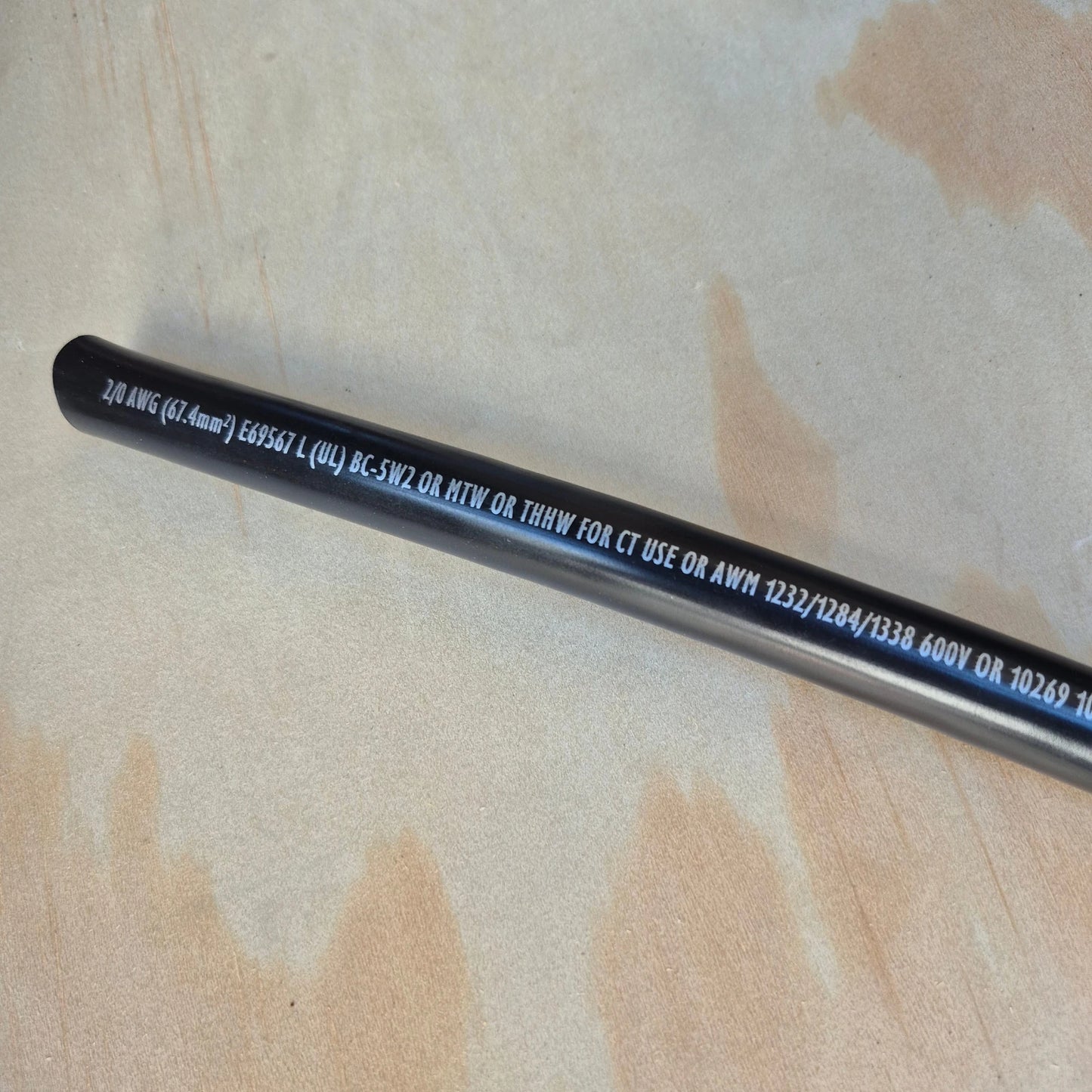
- CSA Type TEW – 105°C Dry
- UL MTW – 90°C Dry / 60°C Wet
- UL BC-5W2 Marine Cable — approved for boat wiring applications
- 600V rated (1000V AWM 10269)
- Oil resistant & sun resistant jacket rating
- Great for solar / renewable energy wiring and inverter battery cables
ABYC note
This is UL 1426 BC-5W2 marine cable and is commonly used in ABYC-compliant marine electrical systems when installed according to the applicable regulations (proper sizing, fusing, terminations, and routing).
- Solar battery banks (PV storage wiring)
- Inverter / charger DC input wiring
- Marine battery and starter circuits
- Equipment wiring and control panels (MTW / TEW applications)
- Grounding and bonding where permitted
| Conductor | Flexible stranded tinned copper |
|---|---|
| Insulation | PVC |
| Voltage Rating | 600V (1000V AWM 10269) |
| Temperature Rating | 105°C Dry (CSA TEW), 90°C Dry / 60°C Wet (UL MTW) |
| Listings | CSA C22.2 No. 127 Type TEW • UL 1063 MTW • UL 1426 BC-5W2 • UL 83 THHW • FT1 |
| Other Ratings | Oil Res I • Sun Res • RoHS-2 Compliant • Moisture resistant |
| Manufactured | North America (Southwire) |
| Size | Stranding | Nominal O.D. | Weight (lbs/Mft) |
|---|---|---|---|
| 6 AWG | 133/27 | 0.324" (8.2 mm) | 105 |
| 4 AWG | 133/25 | 0.387" (9.8 mm) | 161 |
| 2 AWG | 133/23 | 0.472" (12.0 mm) | 271 |
| 1 AWG | 133/22 | 0.521" (13.2 mm) | 324 |
| 1/0 AWG | 259/24 | 0.561" (14.2 mm) | 403 |
| 2/0 AWG | 259/23 | 0.660" (16.8 mm) | 497 |
Dimensional and rating data per manufacturer specification, and is subject to change without notice. Please contact us if you need to confirm details for your order.
How is this different from welding cable?
This cable is CSA and UL listed as TEW / MTW / BC-5W2 marine cable, using a tinned copper conductor and formal ratings for marine and equipment wiring.
Welding cable is often chosen for it's great flexibility and low cost, but it does not typically carry the same marine/equipment certifications, and is not usually as rugged/durable.
Is this suitable for solar battery banks and inverters?
Absolutely — This is a preferred choice and commonly used for solar battery wiring, inverter battery cables, and other high-current DC connections where reliability and corrosion resistance are important.
Does this meet ABYC requirements?
Yes. This is UL 1426 BC-5W2 marine cable with a tinned copper conductor — commonly used in ABYC compliant marine electrical systems.
However ABYC compliance depends on the overall installation (sizing, fusing, terminations, routing, and protection), so be sure your install follows the applicable regulations.
Is this cable copper-clad aluminum (CCA)?
No. This is pure copper cable, with a tin coating on the strands to prevent corrosion.
Copper Clad Aluminum (CCA) is typically not a suitable choice for current carrying applications and we do not recommend using it.
Do you ship it as one continuous length?
We aim to supply continuous lengths whenever possible. If an order must be split due to inventory constraints, we’ll contact you first to discuss.
What does the “stranding” column mean (e.g. 133/27 or 259/24)?
The stranding format shows the number of individual copper strands and the AWG size of each strand. For example, 133/27 means 133 strands of 27 AWG copper wire bundled together to make the finished conductor.
Higher strand counts generally mean a more flexible cable. Fine-strand construction improves flexibility while maintaining the full copper cross-sectional area of the stated AWG size.
Share
Great cable, 265Amp capacity, not that I've come close to that. It's very flexible and seems high quality throughout. CSA approved as well.