Sapphire Energy
Class T Fuse – 250 V DC, 10 kA AIC (UL)
Class T Fuse – 250 V DC, 10 kA AIC (UL)
Couldn't load pickup availability
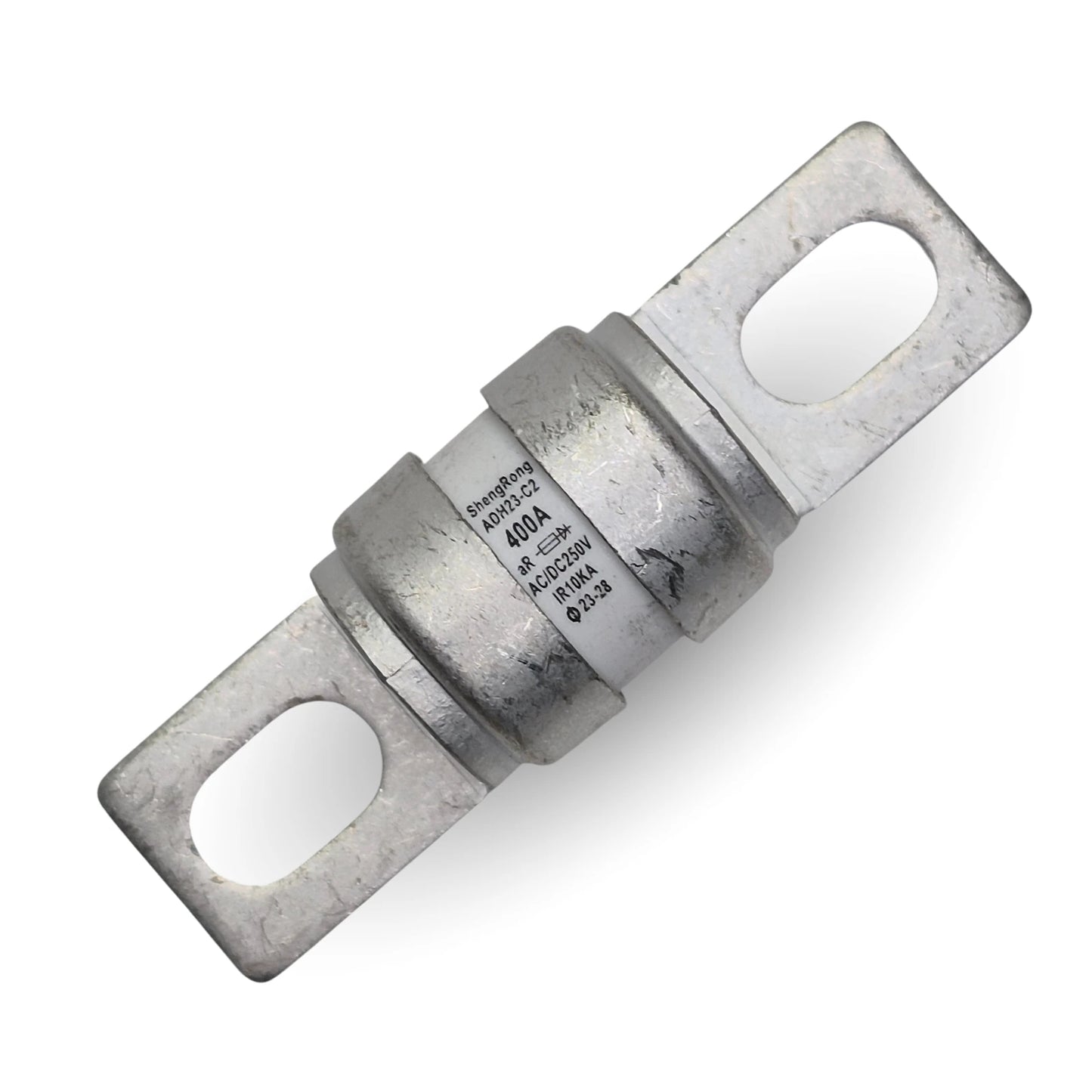
Designed for modern high-current DC systems, these UL-listed Class T fuses provide fast, reliable protection for large lithium battery banks and inverter-driven loads. With a 250 V DC rating and a 10 kA interrupt capacity, Class T fuses are the preferred choice where fault currents exceed the limits of ANL or MEGA fuses — especially in parallel battery configurations.
Each fuse features a ceramic body for thermal stability and arc containment, along with a corrosion-resistant internal element designed for consistent electrical performance and predictable behavior under both surge and fault conditions.
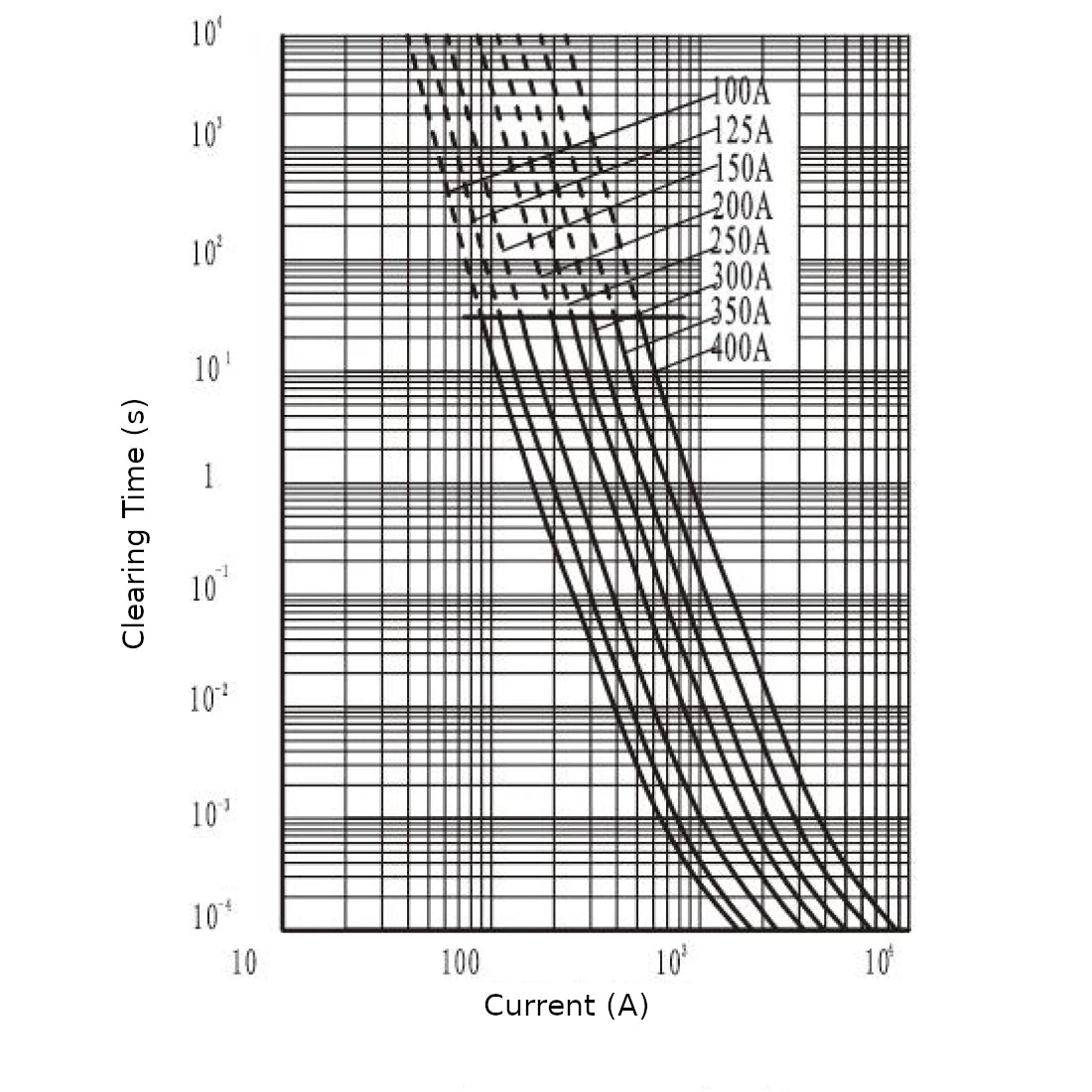
Commonly used in off-grid solar, marine, RV, and high-power DC systems, Class T fuses are engineered to tolerate brief inverter surge currents while still clearing dangerous short-circuit faults rapidly.
- Corrosion-resistant construction — Designed for long-term reliability in demanding electrical environments
- High DC voltage rating — 250 V DC for modern lithium systems
- High interrupt capacity — 10 kA AIC for serious fault protection
- UL-listed safety — suitable for critical battery protection
- Ideal for parallel battery banks — where fault currents can be extreme
- Ceramic body construction — stable, predictable performance under fault conditions
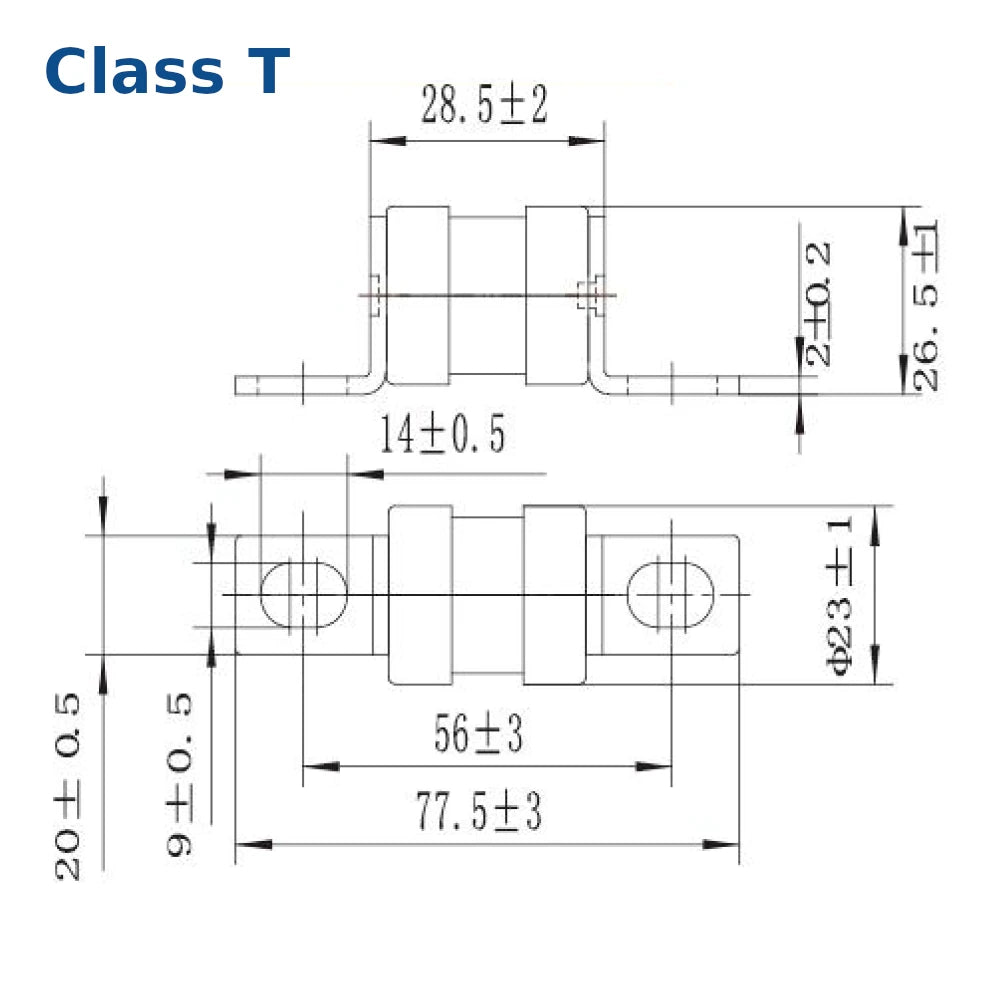
| Fuse Type | Class T (C2 Series) |
|---|---|
| Voltage Rating | 250 V DC |
| Interrupt Rating | 10 kA AIC |
| Ampacity Range | 100 A – 400 A (variant dependent) |
| Certification | UL Listed |
| Construction | Ceramic body with corrosion-resistant internal components |
| Application | Lithium battery banks, inverters, marine, solar, RV, and high-current DC systems |
Fuse amp rating should be selected based on cable size, inverter requirements, and system design. Class T fuses are commonly used on large inverters and parallel lithium battery banks where fault currents can exceed the safe limits of ANL or MEGA fuses.
Choose the holder for existing systems, or grab the bundle for a one-click, ready-to-install solution.
Why should I use a Class T fuse instead of ANL or MEGA?
Class T fuses offer significantly higher interrupt ratings and faster fault-clearing performance than ANL or MEGA fuses. They are the preferred choice for large lithium battery banks, parallel battery configurations, and high-power inverters where potential fault currents can exceed the safe limits of lower-rated fuse types.
Can this fuse handle inverter surge currents?
Yes. Class T fuses are designed to tolerate short-duration surge currents commonly seen during inverter startup or motor loads, while still clearing dangerous short-circuit faults rapidly.
Is this fuse suitable for lithium batteries?
Absolutely. These Class T fuses are commonly used to protect lithium battery systems, especially when batteries are connected in parallel and fault current capability is high.
What industries commonly use Class T fuses?
Class T fuses are widely used in off-grid solar, marine, RV, commercial DC power systems, and high-power mobile installations.
How do I choose the correct amp rating?
Fuse size should be selected based on cable size, inverter requirements, and overall system design. The fuse is intended to protect wiring and equipment, not limit normal operating current.
Share