AIMS POWER
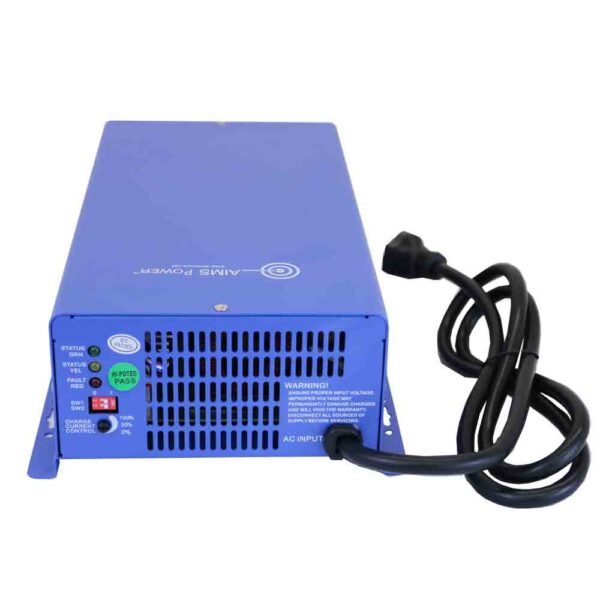
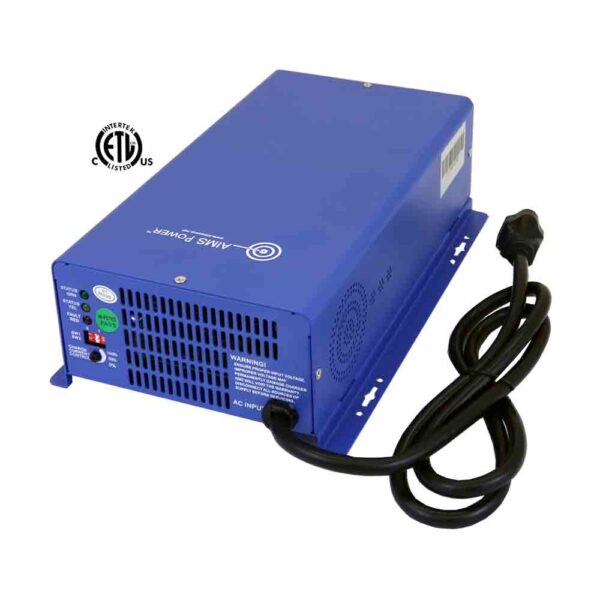
AIMS 12V/24V Converter/Charger 75A UL & CSA
AIMS 12V/24V Converter/Charger 75A UL & CSA
Couldn't load pickup availability
AIMS 12V/24V Converter & Battery Charger — 75A
Recharge faster when shore power or a generator is available. The AIMS Power CON120AC1224VDC delivers up to 75A at 12V or 37.5A at 24V, making it a practical charging solution for RVs, campervans, off-grid cabins, boats, and mobile work setups.
Automatic battery-voltage detection, four selectable battery profiles, and adjustable charging current give you flexibility across LiFePO₄, AGM, gel, and flooded lead-acid batteries. Install it as a dedicated shore-power charger or use it to recharge your cabin’s battery bank during generator runs.
- Less Time Waiting for a Recharge — up to 75A at 12V or 37.5A at 24V helps replenish larger battery banks quickly.
- Adjustable to Your Battery Bank — set charging current from 20–100% of rated output to suit your battery’s charging limit.
- Shore Power & Generator Charging — a wide AC input range accommodates varying supply voltage, with reduced output at low input voltage.
- Lithium & Lead-Acid Compatible — selectable profiles for LiFePO₄, AGM, gel, and flooded lead-acid batteries.
- Charging Plus DC Load Support — supply connected DC equipment while charging, with available output shared between loads and the battery.
- Certified & Backed — listed to UL 458 and CSA C22.2 No. 107.1 standards, with a 2-year manufacturer’s warranty.
A high-output charger is especially useful when charging opportunities are limited. Plug in at the campsite, recharge between work shifts, or restore your cabin’s battery reserve while the generator is running.
For example, bringing a 12V 300Ah battery bank from 10% to 90% requires approximately 240Ah. At a sustained 75A, that’s around 3.2 hours of bulk-equivalent charging. Allow additional time for charging taper, connected loads, and operating conditions.
Several cloudy days don’t have to interrupt your plans. Add an AC charger to your solar-equipped RV or cabin so you can replenish the battery bank from shore power or a generator when solar production is low.
Check the battery’s maximum charging current against the combined output of all active charging sources.
The charger automatically detects a connected 12V or 24V battery bank. Select the appropriate battery profile and set the output current to suit your battery manufacturer’s recommendations.
Its Bulk, Absorption, and Float charging stages provide higher output during recharge, then transition to maintaining the battery. Connected DC loads can use part of the available output while the remainder charges the bank.
A 75A charger doesn’t mean every battery should receive 75A. Use the current adjustment to suit smaller banks or reduce demand on a limited AC supply. Disconnect the converter before changing battery-profile or current settings, as instructed by AIMS.
- RVs, campers, and travel trailers
- Campervans and school-bus conversions
- Off-grid cabins using generator charging
- Mobile food trucks and concession trailers
- Service vehicles and work trailers
- Boat house-battery banks with a suitable dry installation location
- 12V and 24V battery banks needing an additional AC charging source
- Automatic 12V / 24V battery-voltage detection
- Four selectable battery charging profiles
- Three-stage Bulk, Absorption, and Float charging
- Adjustable output current from 20–100% of rated output
- LED indicators for charging and fault status
- Thermal- and load-controlled cooling fan
- Optional battery temperature sensor connection
- Support for up to two matching chargers in parallel
- Reverse-polarity protection using fuses, plus voltage, short-circuit, and temperature safeguards
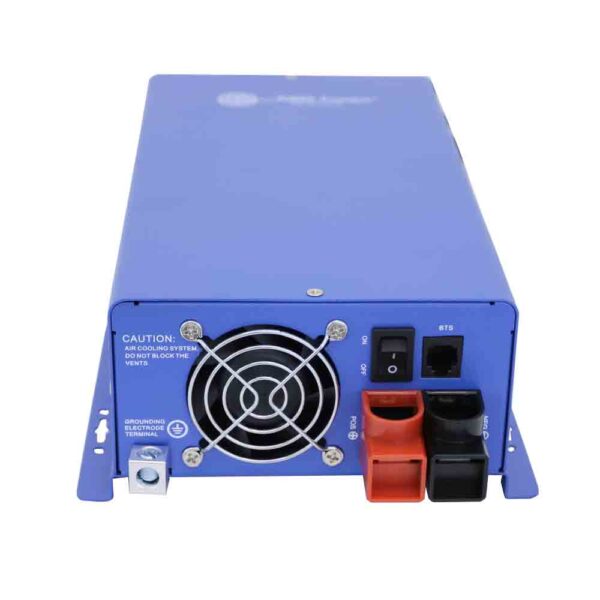
- Included 4-foot hardwired AC power cord
| Specification | Value |
| Model | CON120AC1224VDC Manual designation: CON120AC12/24VDC |
| Charger Type | AC-to-DC converter / battery charger |
| Battery System Voltage | 12V or 24V — automatic detection |
| Maximum Output Current | 75A at 12V 37.5A at 24V |
| Current Adjustment | 20–100% of rated output Approximately 15–75A at 12V Approximately 7.5–37.5A at 24V |
| AC Input Voltage | 96–145VAC: full performance 70–96VAC: approximately 50% rated output |
| AC Input Frequency | 40–70Hz |
| Nominal AC Input Current | Less than 9A at rated output, per manufacturer |
| Battery Profiles | LiFePO₄, flooded lead-acid, AGM, gel |
| Charging Stages | Bulk, Absorption, Float |
| Efficiency | Approximately 80% or higher |
| Parallel Operation | Maximum two matching units Up to 150A at 12V or 75A at 24V |
| Cooling | Thermal- and load-controlled fan |
| Battery Temperature Sensor | Optional — sold separately |
| Operating Temperature | −10°C to +40°C ambient |
| Storage Temperature | −20°C to +80°C |
| Relative Humidity | 5–95%, non-condensing |
| Acoustic Noise | Up to 50dB(A) at 1 metre with fan at full speed |
| Dimensions (D × W × H) | 10.25″ × 6.75″ × 3.25″ Approximately 260 × 171 × 83mm |
| Unit Weight | Approximately 2.9kg / 6.5lb |
| Boxed Weight | Approximately 3.2kg / 7lb |
| AC Power Cord | 4-foot hardwired cord — included |
| DC Output Connections | Bolted terminals with M6 attachment screws |
| Safety Standards | UL 458 and CSA C22.2 No. 107.1 |
| Warranty | 2-year manufacturer’s warranty |
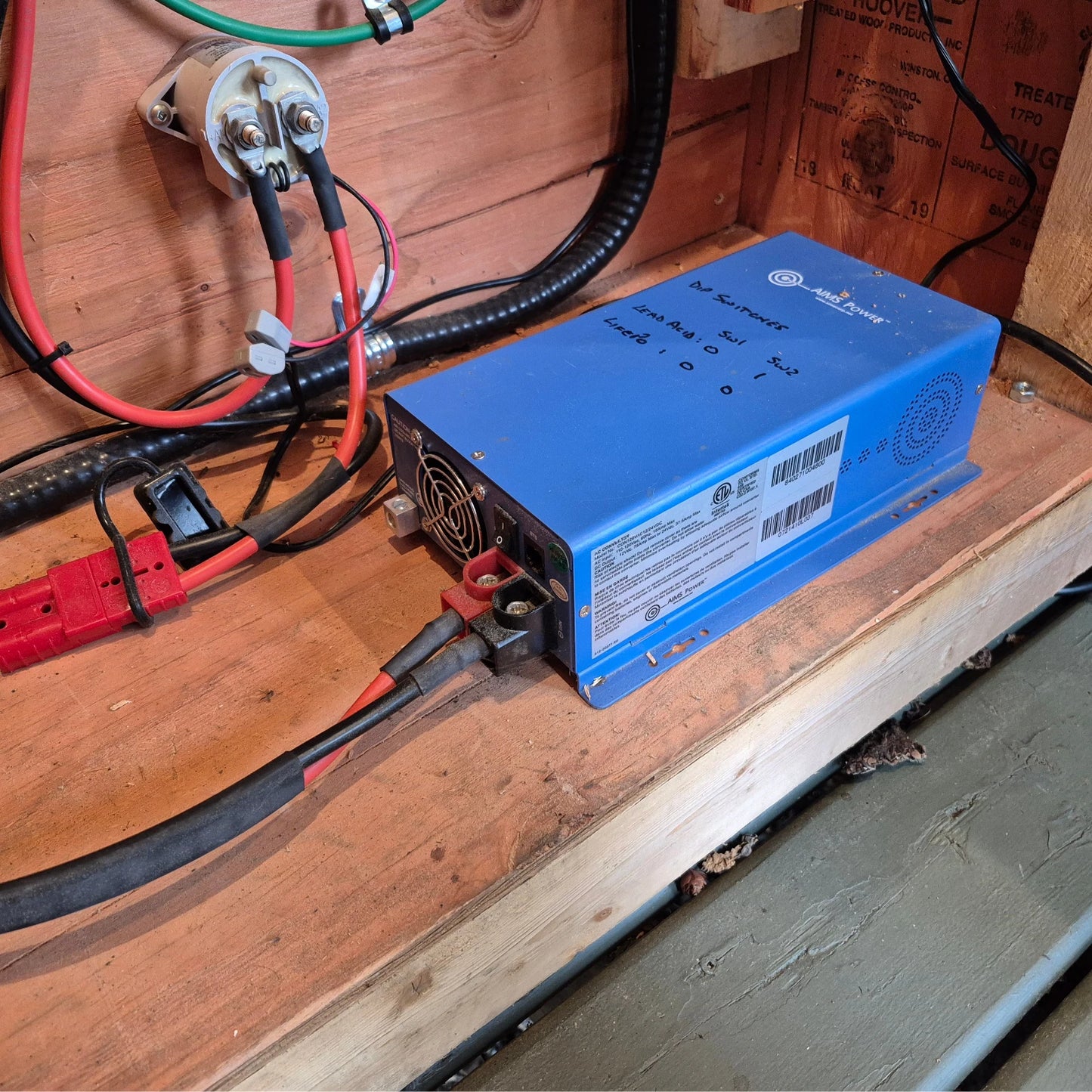
Set the two battery-selection DIP switches to match your battery chemistry. For a compatible LiFePO₄ battery, set both switches to ON.
| Battery Type | Switch 1 | Switch 2 |
| Flooded / Open Lead-Acid | OFF | OFF |
| Gel | ON | OFF |
| AGM | OFF | ON |
| LiFePO₄ | ON | ON |
Disconnect AC and battery power before changing settings. Follow the numbered switches and ON marking on the switch block rather than relying on viewing direction. Reconnect the battery before applying AC power.
| Battery Type | 12V Charging / Float | 24V Charging / Float |
| Flooded Lead-Acid | 14.6V / 13.6V | 29.2V / 27.2V |
| Gel | 14.1V / 13.6V | 28.2V / 27.2V |
| AGM | 14.4V / 13.6V | 28.8V / 27.2V |
| LiFePO₄ | 14.4V / 13.6V | 28.8V / 27.2V |
Confirm profile voltages and charging current against your battery manufacturer’s requirements before use.
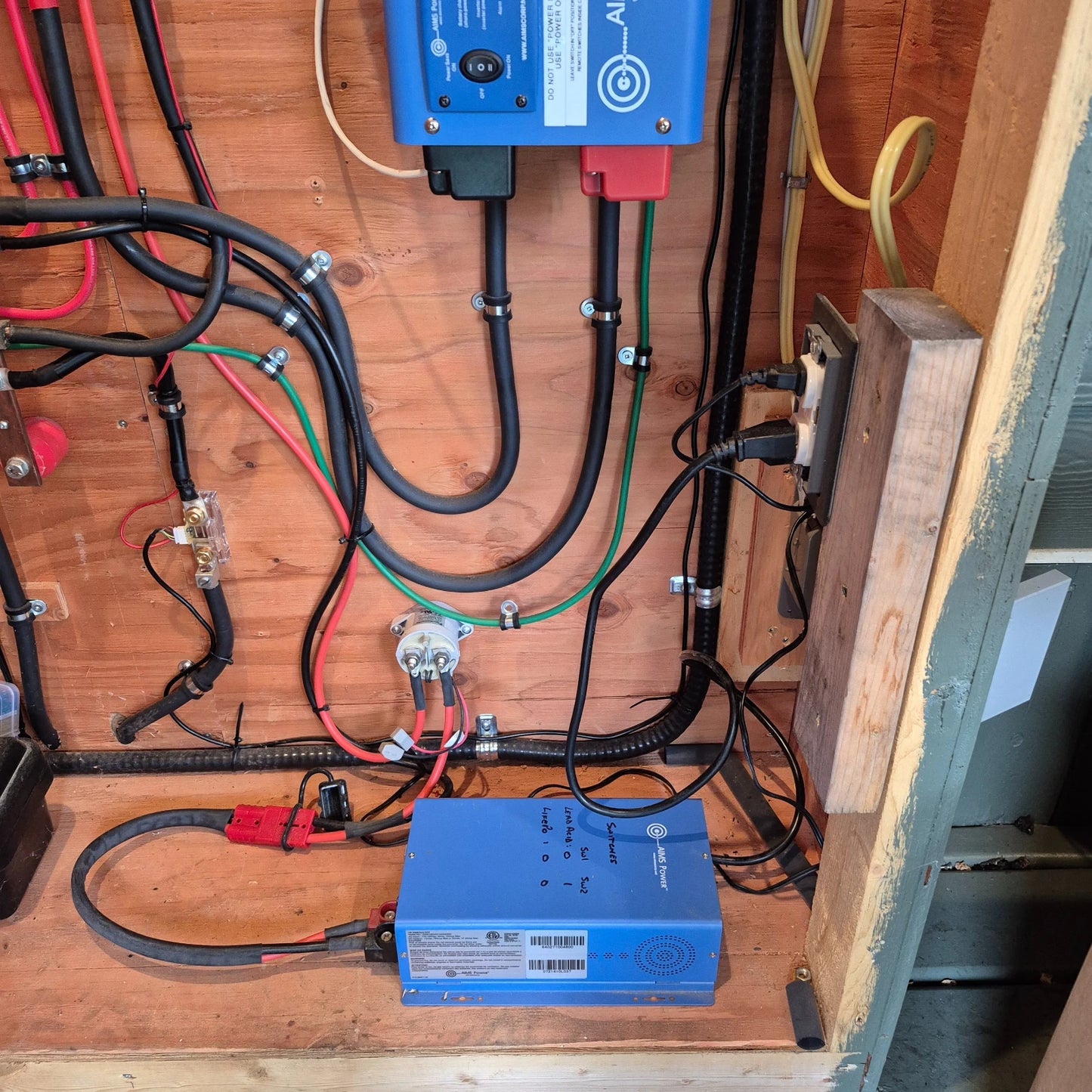
Install in a dry, ventilated location with space for cooling airflow. Use appropriately sized DC cables, suitable battery-side circuit protection, and an AC supply that meets the manufacturer’s requirements.
Connect the battery before applying AC power. Keep the converter protected from rain, snow, and battery gases, and follow the AIMS manual for grounding and installation.
Want to use your AIMS charger in the RV, then move it to your cabin or workshop? Add SB120 connector hardware to your charging leads and matching connections at each battery bank for convenient plug-in connections.
Choose contacts to suit your cable size, maintain consistent polarity, and use matching connector housings. Switch off and unplug the charger’s AC supply before connecting or disconnecting. Check the battery profile and current setting each time you move between banks.
Is this a good charger for an RV lithium upgrade?
Yes, provided its charging profile suits your batteries. The dedicated LiFePO₄ setting and adjustable current make it a practical option when an older RV converter doesn’t offer suitable lithium charging.
For a larger bank, the 75A output can shorten recharge time. For a smaller battery, reduce the current to its recommended charging rate.
How quickly will it recharge my battery bank?
For a 12V 300Ah bank going from 10% to 90%, expect approximately 3.2 hours at a sustained 75A, plus time for charging taper and other operating factors.
If your RV equipment is running while you charge, some output goes to those loads. For example, a 10A DC load leaves approximately 65A available for the battery when the charger is delivering 75A.
How do I set the DIP switches for my battery?
The two DIP switches select the charging profile. Set Switch 1 / Switch 2 as follows:
- Flooded lead-acid: OFF / OFF
- Gel: ON / OFF
- AGM: OFF / ON
- LiFePO₄: ON / ON
For a compatible Sapphire LiFePO₄ battery, simply set both switches to ON and adjust the charging current to suit your battery’s recommended limit. The charger detects 12V or 24V automatically—the switches choose the chemistry.
Disconnect AC and battery power before changing settings, then reconnect the battery before applying AC power.
Can I use it with a portable generator?
Yes. It’s a useful way to recharge an off-grid cabin or RV battery bank when solar isn’t keeping up. Its wide AC input range accommodates varying supply voltage, although output drops to approximately half its rating between 70 and 96VAC.
Choose a generator with enough continuous capacity for the charger and any other equipment you’re running. Reducing the charging-current setting can help suit a smaller available supply.
Can it power my DC equipment while charging?
Yes. With the battery connected, it can support your DC loads while charging or maintaining the bank. That’s useful for keeping RV lights, fans, pumps, and other equipment running while plugged into shore power.
The output is shared between equipment and battery charging. If your loads exceed the available charger output, the battery supplies the difference.
Can I move this charger between battery banks?
Yes. Fitting your charging leads with SB120 connectors makes it convenient to move the charger between prepared battery banks—for example, charging your RV at home and taking the same charger to your cabin.
Use matching housings, correctly sized contacts, and suitable cable protection at each bank. Disconnect AC power before unplugging the DC connection, then check the battery chemistry and charging-current setting before reconnecting. Connect the battery first, followed by AC power.
Does it automatically switch between 12V and 24V?
Yes. It senses the connected battery bank and selects the corresponding voltage. You still choose the correct battery chemistry profile and charging-current setting.
A connected battery with sufficient voltage is required for detection, so don’t treat it as a standalone bench power supply or assume it will wake every deeply discharged lithium battery.
Can I use it alongside my solar charger?
Yes. An AC charger makes a useful partner for solar: use sunshine when it’s available, then recharge from shore power or a generator when needed.
Set both chargers appropriately for your batteries and ensure their combined charging current stays within the bank’s permitted limit.
Can I add a second charger for a larger bank?
Yes. AIMS supports up to two matching units in parallel, providing up to 150A at 12V or 75A at 24V. This can help shorten generator runs when charging a larger battery bank.
Your battery bank, DC wiring, circuit protection, and AC supply must support the combined output.
Can I leave it connected to shore power?
The charger transitions to Float after its charging stages, making it suitable for maintaining a compatible battery bank while shore power is available.
For extended storage, follow your battery manufacturer’s recommendations and periodically check the battery and charging system.
Will it charge my lithium battery in freezing weather?
That depends on the battery’s temperature limits and protection system. A lithium charging profile does not make cold cells safe to charge.
A self-heating battery can help support cold-weather charging, provided its heater and BMS are designed for the conditions. Follow the battery manufacturer’s guidance; the optional AIMS temperature sensor is not a substitute for lithium low-temperature charging protection.
Share