Sapphire Energy
12.8V 300Ah 250A Heavy Duty Self-Heating LiFePO₄ w/Bluetooth
12.8V 300Ah 250A Heavy Duty Self-Heating LiFePO₄ w/Bluetooth
Couldn't load pickup availability
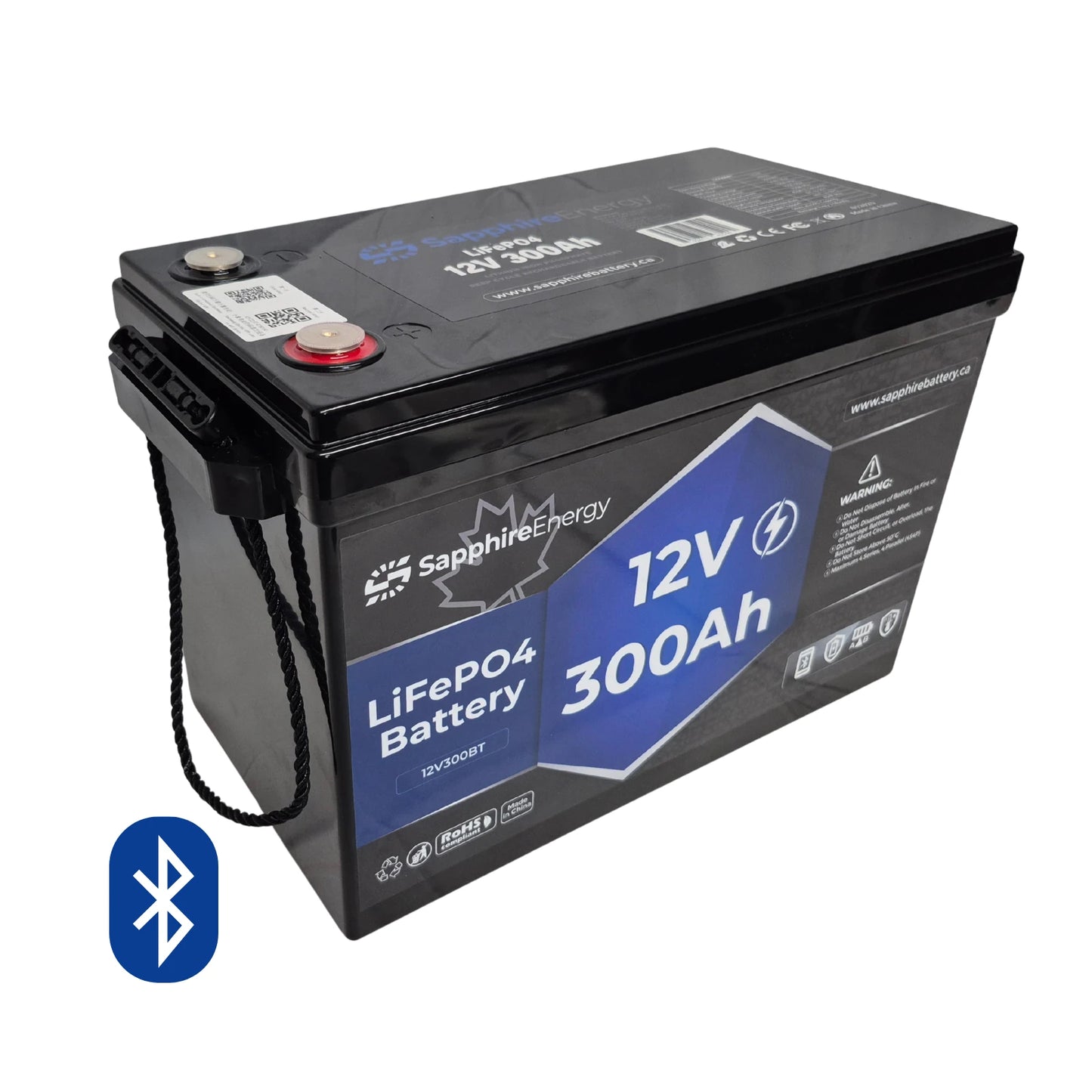
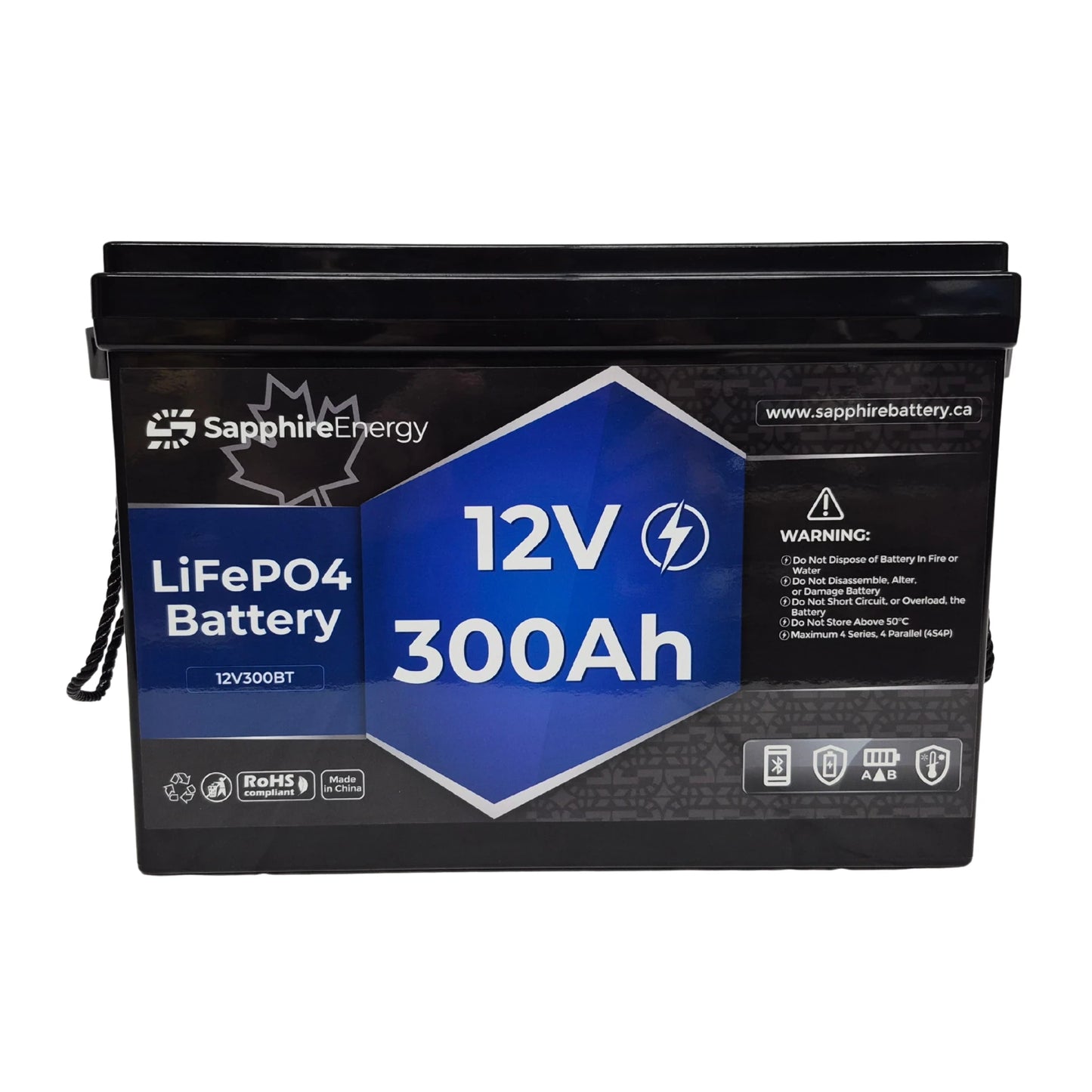
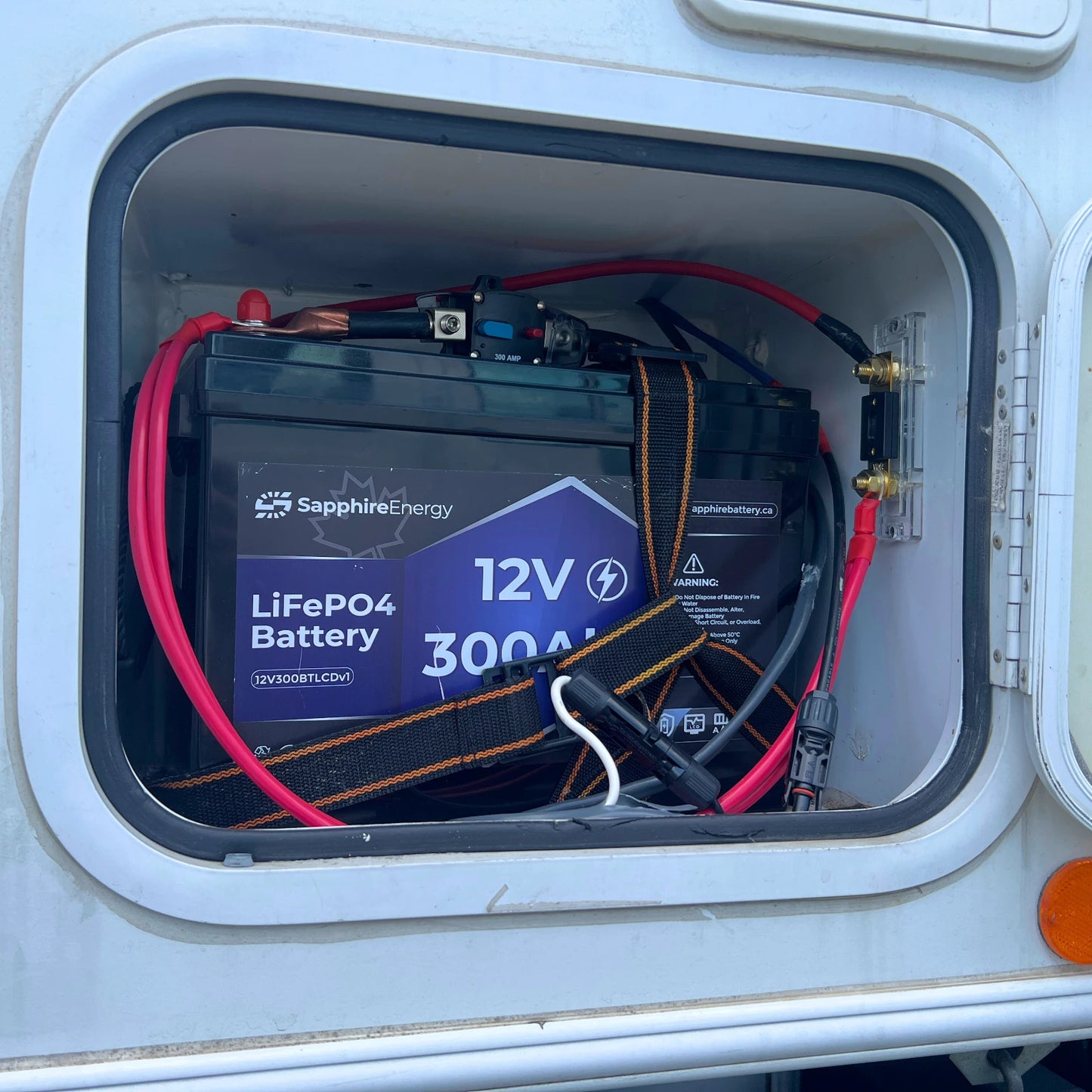
12.8V 300Ah Heavy Duty Self-Heating LiFePO₄ Battery with 250A Bluetooth BMS
Cold-weather capability. Massive capacity. Even more output. This premium 300Ah LiFePO₄ battery combines 3840Wh of energy storage, automatic self-heating, Bluetooth monitoring, upgraded internal wiring, and an ultra-heavy-duty 250A continuous-discharge BMS.
Built for demanding RV, marine, off-grid, mobile-workshop and backup-power systems, it delivers the capacity needed for extended runtime while supporting substantially larger loads than conventional lithium batteries equipped with 100A or 150A BMS units.
The integrated heating system also allows the battery to accept a charge in freezing conditions. When the cells are too cold for safe charging, the system warms them before charging is enabled—an important advantage for winter camping, cabins, work trailers and other unheated installations.
Why You’ll Love This
- Huge 3840Wh Capacity: Provides extended runtime for off-grid, RV, marine and backup-power systems.
- Ultra-Heavy-Duty 250A BMS: Supports demanding DC loads and high-output inverter systems.
- Upgraded Internal Wiring: The battery’s internal current path has been strengthened to support its higher continuous-output rating.
- Automatic Self-Heating: Warms the cells when required so the battery can safely begin charging in freezing conditions.
- Bluetooth Monitoring: View state of charge, current, cell voltages, temperatures, alarms and other live battery information from your phone.
- Fast Charging: Accepts up to 100A when paired with suitable lithium-compatible charging equipment.
- Expandable Systems: Supports series, parallel and combined 4S4P battery-bank configurations using matching batteries.
- 5-Year Limited Warranty: Long-term coverage backed by Sapphire Energy.
The Premium 300Ah Model
This model builds on the capacity and performance of our standard High Output 300Ah battery, adding both cold-weather charging capability and substantially greater continuous-current capacity.
| Feature | 250A Self-Heating Model |
|---|---|
| Capacity | 300Ah |
| Nominal Energy | 3840Wh |
| Continuous Discharge | 250A |
| Approximate DC Output | 3200W at 12.8V |
| Self-Heating | Yes |
| Bluetooth Monitoring | Yes |
| Internal Wiring | Upgraded for 250A Output |
Choose this version when: the battery may need to charge below freezing, your system has unusually demanding DC loads, or you want greater operating headroom for a high-output inverter.
Automatic Cold-Weather Heating
LiFePO₄ cells can safely discharge at temperatures below freezing, but charging frozen cells can cause permanent internal damage. This battery combines low-temperature charge protection with an automatic internal heating system.
When charging is attempted at approximately 0°C or below, the heating system warms the cells instead of immediately allowing charge current into them. Normal charging is released once the battery reaches approximately +5°C.
- Helps prevent damaging low-temperature charging
- Automatically warms the battery when required
- Allows charging to resume after the cells reach a safe temperature
- Ideal for Canadian winters and unheated battery compartments
- No separate heater controller or manual heater switch required
Important: Self-heating does not make the battery immune to extreme cold. Available charging power, insulation, ambient temperature and installation conditions all affect how quickly the cells can warm. Whenever practical, install the battery in a dry, insulated and protected compartment.
Built for Serious Current
The integrated 250A Bluetooth Battery Management System and upgraded internal wiring allow this battery to deliver up to 250A continuously under suitable operating conditions.
At the battery’s nominal 12.8V voltage, 250A represents approximately 3200W of DC power. This provides additional operating headroom for large inverters, powerful DC equipment, trolling motors, pumps, hydraulic systems, communications equipment and mobile-workshop loads.
A 250A BMS rating does not automatically mean that every 3000W inverter can operate continuously from one battery. At lower battery voltages, a 3000W inverter can draw more than 250A after inverter losses are included. Continuous load, startup surge, inverter efficiency and low-voltage operating current must all be checked.
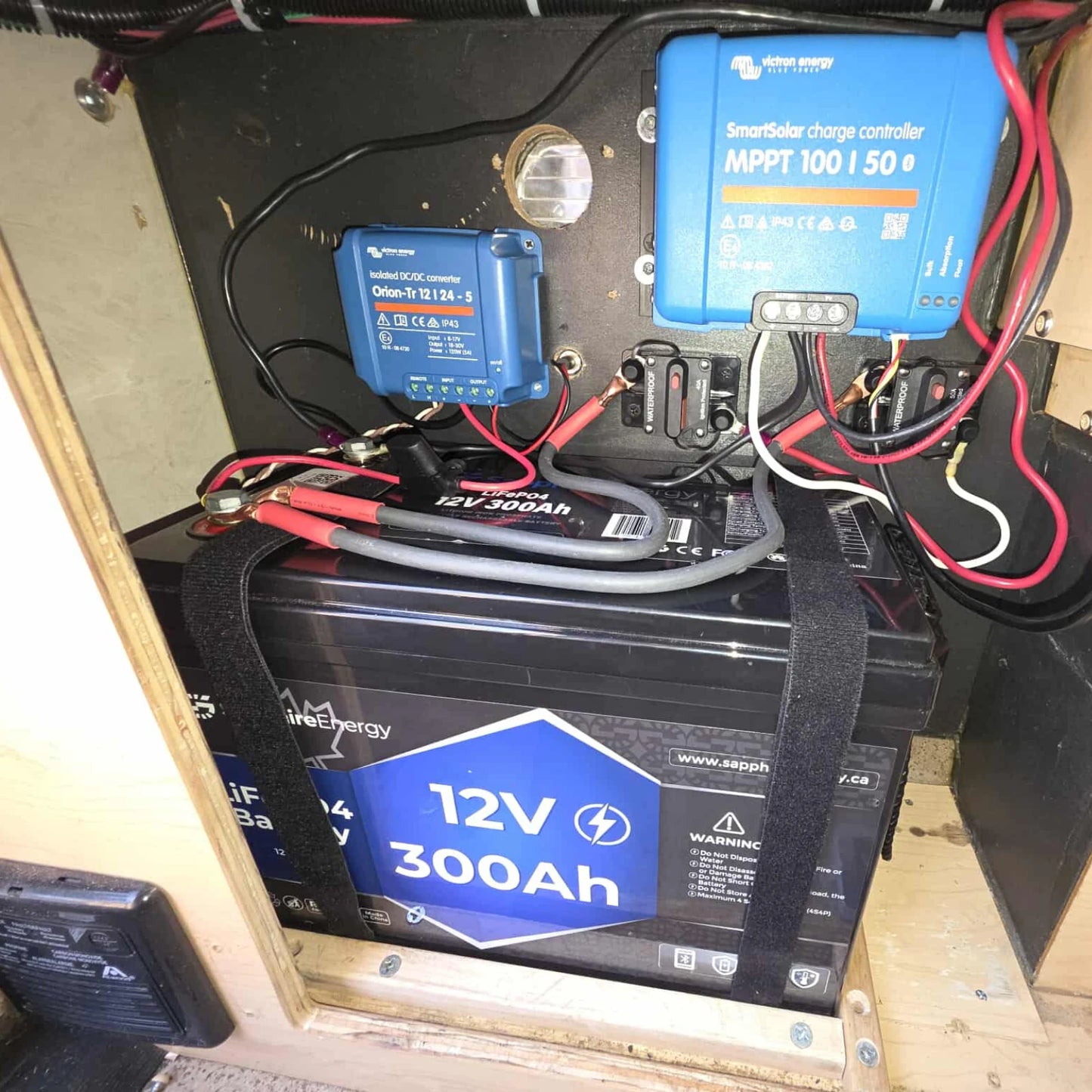
Properly sized battery cable, busbars, disconnects, terminal connections and external over-current protection are essential when operating at high current.
Example Loads and Estimated Runtime
With 3840Wh of nominal energy storage, this battery can operate light loads for several days or supply demanding equipment for shorter periods. The higher-output BMS increases the amount of power available at one time; it does not change the battery’s total stored energy.
| Example Load | Typical Consumption | Estimated Runtime |
|---|---|---|
| Starlink Mini | ~30W | Up to 128 hours |
| Diesel Heater | ~10–20W average | Approximately 190–240 hours |
| LED Lighting | ~25W | Up to 154 hours |
| CPAP Machine | ~40W | Up to 96 hours |
| 50 lb 12V Trolling Motor | 10–20A at trolling speed | Approximately 15–30 hours |
| 12-Cup Coffee Maker | ~1000W while brewing | Approximately 20 full pots |
| 1200W Microwave | ~1500W input | Approximately 120 minutes |
Runtime estimates are based on typical equipment consumption and a fully charged 3840Wh battery. Actual results vary with equipment efficiency, temperature, wiring losses, inverter consumption, battery condition, operating speed and usage patterns. Coffee estimates assume normal brewing cycles without extended use of the warming plate.
Bluetooth Battery Monitoring
The integrated Bluetooth BMS provides real-time access to detailed battery information using a compatible mobile app. You can check battery operation without opening the compartment or installing a separate display.
- Battery state of charge
- Live battery voltage and current
- Charge and discharge power
- Individual cell voltages
- Cell-balancing status
- Internal temperature readings
- Charge and discharge status
- Active alarms and BMS protection conditions
Particularly Useful in Winter: Bluetooth monitoring lets you view battery temperature and confirm when the battery is heating, accepting a charge or waiting for the cells to reach a safe charging temperature.
Features
- 300Ah nominal capacity
- 3840Wh nominal energy storage
- 250A maximum continuous discharge
- 100A maximum charge current
- Ultra-heavy-duty Bluetooth BMS
- Upgraded high-current internal wiring
- Automatic internal self-heating
- Low-temperature charge protection
- Mobile app battery monitoring
- Automatic cell balancing
- Over-charge protection
- Over-discharge protection
- Over-current protection
- Short-circuit protection
- High-temperature protection
- Grade A LiFePO₄ cells
- 5000+ cycle design life under suitable operating conditions
- Series connectable up to 4S
- Parallel connectable up to 4P
- Combined configurations up to 4S4P
- Compact enclosure with dual rope carry handles
- 5-Year Limited Warranty
Perfect For
- Winter RVing and cold-weather camping
- RVs, campers, motorhomes and van conversions
- Off-grid cabins and tiny homes
- Unheated solar battery compartments
- Fishing boats and electric trolling motors
- Marine house-power systems
- High-output 12V inverter systems
- Service trucks, trailers and mobile workshops
- Solar and wind energy-storage systems
- Starlink and remote communications equipment
- Diesel heaters and winter camping systems
- CPAP machines and overnight medical equipment
- Amateur and HAM radio stations
- Emergency backup and disaster preparedness
Fast, Flexible Charging
The battery supports charging currents of up to 100A when paired with suitable lithium-compatible charging equipment. It may be charged from a programmable AC charger, solar charge controller, DC-to-DC alternator charger or inverter/charger.
Lower charging currents are also acceptable. Charging at 40A or 50A places less demand on generators, shore-power connections, alternators and charging equipment while still providing practical recharge times.
For best results, use equipment with a dedicated or programmable LiFePO₄ charging profile. Lead-acid equalization and desulfation modes must be disabled.
Expandable Battery Banks
This battery can be used individually or combined with matching batteries for larger systems. Up to four batteries may be connected in series, and up to four may be connected in parallel.
- Maximum Series Configuration: 4 batteries for a 51.2V nominal battery bank
- Maximum Parallel Configuration: 4 batteries for up to 1200Ah at 12.8V nominal
- Maximum Combined Configuration: Up to 4S4P using 16 matching batteries
Connected batteries must be the same model, capacity, age and state of charge. Each battery should be individually charged and verified before assembling a series or parallel bank. Do not combine this 250A self-heating model in the same bank with the non-heating 200A version.
Specifications
| Chemistry | LiFePO₄ (Lithium Iron Phosphate) |
|---|---|
| Nominal Voltage | 12.8V |
| Capacity | 300Ah |
| Nominal Energy | 3840Wh |
| Battery Management System | 250A Bluetooth BMS |
| Max Continuous Discharge | 250A |
| Approximate Continuous DC Output | 3200W at 12.8V nominal |
| Max Charge Current | 100A |
| Self-Heating | Automatic internal cell heating |
| Heating Activation | Approximately 0°C during charging |
| Charging Release Temperature | Approximately +5°C |
| Low-Temperature Protection | Automatic low-temperature charge protection |
| Bluetooth | Mobile app monitoring for compatible iOS and Android devices |
| Cell Balancing | Automatic BMS-controlled balancing |
| Cycle Life | 5000+ cycles under suitable operating conditions |
| Dimensions (L × W × H) | 15.25″ × 7.7″ × 10.75″ 385mm × 192mm × 260mm |
| Weight | Approximately 56 lbs (25.4kg) |
| Terminals | M8 bolts included |
| Handles | Dual rope carry handles |
| Series Connection | Maximum 4S |
| Parallel Connection | Maximum 4P |
| Maximum Combined Configuration | 4S4P |
| Warranty | 5-Year Limited Warranty |
Specifications are provided for general reference and may be updated as components or production revisions change. Always confirm critical dimensions, charging settings, temperature limits and installation requirements before completing a system design.
Frequently Asked Questions
How does the self-heating system work?
The battery monitors its internal cell temperature while a charging source is available. If charging is attempted when the cells are too cold, the battery activates its internal heating system instead of immediately allowing the cells to charge.
Once the battery reaches a safe temperature, the BMS releases the low-temperature charging protection and normal charging begins automatically.
Can it be charged below freezing?
Yes. The automatic heating system is designed to warm the cells before charging begins. Heating activates at approximately 0°C during charging, with normal cell charging released at approximately +5°C.
The time required depends on the battery temperature, available charging power, insulation and surrounding conditions. Very low temperatures may require a longer heating period.
Can it provide power below freezing?
Yes. LiFePO₄ batteries can normally discharge at temperatures below 0°C even though the cells must not be charged while frozen.
Available capacity and power may be reduced at very low temperatures. Installing the battery in a dry, insulated and protected compartment will improve cold-weather performance.
What is the advantage of the 250A BMS?
The 250A BMS allows the battery to operate larger loads without reaching its current limit as quickly as a conventional 100A, 150A or 200A battery.
It also provides additional operating headroom for inverter startup surges and equipment with changing current demand. The upgraded internal wiring supports the higher continuous-current capability.
Can this battery power a 3000W inverter?
It may operate a 3000W inverter at partial output, but a single battery should not automatically be assumed capable of supplying a continuous 3000W AC load.
A 3000W inverter may draw more than 250A when battery voltage, conversion losses and idle consumption are included. Its startup surge may be substantially higher. Check the inverter’s maximum DC input current and surge requirements before designing the system.
For help matching your battery and inverter, visit our Contact Us page.
Does the higher BMS rating increase runtime?
No. Runtime is determined mainly by the battery’s 300Ah capacity and 3840Wh of stored energy. The 250A BMS increases how much current the battery can deliver at one time, but it does not add more stored energy.
The main benefits are support for larger loads, greater surge headroom and less likelihood of reaching the BMS current limit during demanding operation.
Does it include Bluetooth monitoring?
Yes. The integrated Bluetooth BMS communicates with a compatible mobile app and provides access to state of charge, voltage, current, cell voltages, temperatures, balancing status and active protection conditions.
Bluetooth monitoring is particularly useful for observing charging performance and checking battery temperature during cold-weather operation.
Can I connect multiple batteries together?
Yes. Up to four matching batteries may be connected in series, and up to four may be connected in parallel. Properly designed combined configurations of up to 4S4P are permitted.
All batteries in the bank should be the same model, age, capacity and state of charge. Each battery should be fully charged and checked individually before making the final connections.
Parallel installations should use balanced cable routing so the batteries share charge and load current as evenly as possible.
Can I mix it with the 200A non-heating model?
No. Although the batteries have the same nominal voltage and capacity, their BMS ratings, internal wiring and cold-weather behaviour are different.
For predictable current sharing and protection, use matching 250A self-heating batteries throughout the battery bank.
Can it be charged from solar panels?
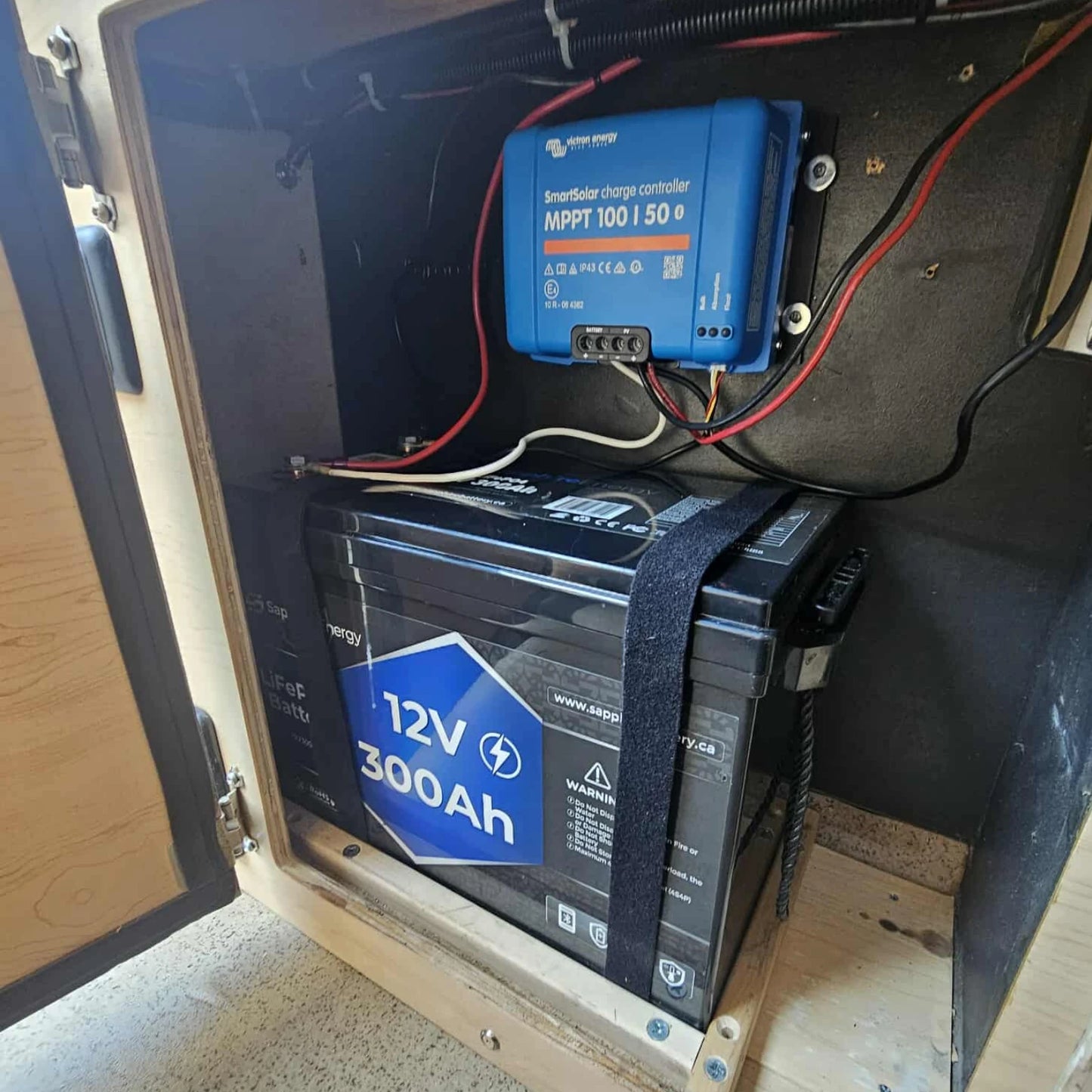
Yes. It can be charged using a lithium-compatible MPPT or PWM solar charge controller. An MPPT controller is generally preferred for larger arrays because it provides greater design flexibility and more efficient energy harvesting.
The controller must be configured for LiFePO₄ batteries, and its combined output must remain within the battery’s 100A maximum charging limit.
Can it be charged from a vehicle alternator?
Yes, but a suitable DC-to-DC charger is normally recommended. A large LiFePO₄ battery can draw substantial current from an alternator when its state of charge is low.
A DC-to-DC charger limits current, supplies a suitable lithium charging profile and helps protect the alternator and vehicle wiring.
Can I use my existing lead-acid charger?
A dedicated or programmable LiFePO₄ charger is strongly preferred. Any charger used must remain within the battery’s permitted voltage and current limits and must not use lead-acid equalization or desulfation pulses.
A suitable lithium charging profile provides more predictable charging and allows the battery’s cold-weather protection and heating functions to operate correctly.
What size battery cables should I use?
Cable size depends on maximum current, cable length, installation method, allowable voltage drop, insulation rating and applicable electrical standards. A circuit approaching 250A requires very substantial cable, busbars and terminal hardware.
Cable size should be calculated for the actual installation rather than selected only from the BMS rating. Keep high-current cable runs as short as practical and use properly crimped, high-quality cable lugs.
For assistance selecting suitable cable and protection, visit our Contact Us page.
Does the BMS replace a fuse or circuit breaker?
No. The internal BMS protects the battery cells and may disconnect the battery during an abnormal condition, but it does not replace properly sized external over-current protection.
A suitable fuse or DC-rated circuit breaker should be installed close to the positive battery terminal. Its rating must protect the installed cable and connected equipment.
Can it be installed inside an RV, cabin or boat?
Yes. LiFePO₄ batteries do not normally release hydrogen gas during charging and do not require watering or other routine maintenance associated with flooded lead-acid batteries.
The battery should still be secured in a dry location protected from physical damage, conductive debris, excessive heat and standing water. Adequate working space should be provided around the terminals, cables and protective devices.
What warranty does this battery include?
This battery includes a 5-Year Limited Warranty covering qualifying defects in materials and workmanship under normal operating conditions.
Correct charging equipment, suitable wiring, external over-current protection, secure mounting and operation within the stated electrical and temperature limits are important for safe performance and warranty coverage.
Questions about compatibility with an inverter, charger, trolling motor or solar system can be submitted through our Contact Us page.
Share